Faith and Good Works II
Good works are often misunderstood. Some reduce them to random acts of kindness. Others elevate them into a means of earning righteousness. But in God’s design, good works are neither currency for salvation nor casual moral gestures. They are the visible expression of the invisible God.
“By faith we understand that the worlds were framed by the word of God, so that the things which are seen were not made of things which are visible” (Hebrews 11:3). Faith is my most loved subject in the Word. I could learn about it nonstop, just as much as I love to teach it. Hebrews 11:3 describes the detail God put into creating the earth—frame by frame. The design was not random or a collection of scattered thoughts; each frame was scripted in the Word. After the worlds were framed by the Word and animated by the Spirit, God saw that it was good (Genesis 1:1–4). Good, in this context, is not simply the opposite of bad but the full alignment of creation with the intention of its Creator.
In Genesis 1, when God saw that it was good, He was not making a casual observation; He was affirming that what had been spoken had fully materialised according to His intent. Nothing was out of place. Nothing was premature. Nothing was deficient. “Good” was the visible evidence that the invisible Word had accomplished exactly what it was sent to do.
A work is not “good” merely because it benefits people. It is good because it aligns with God. And this is where faith becomes more than doctrine we teach—it becomes participation. Faith understands before it sees. Faith aligns with the unseen Word before visible substance appears. When faith gives birth to good works, it is not manufacturing goodness—it is revealing what has already been framed in the Word.
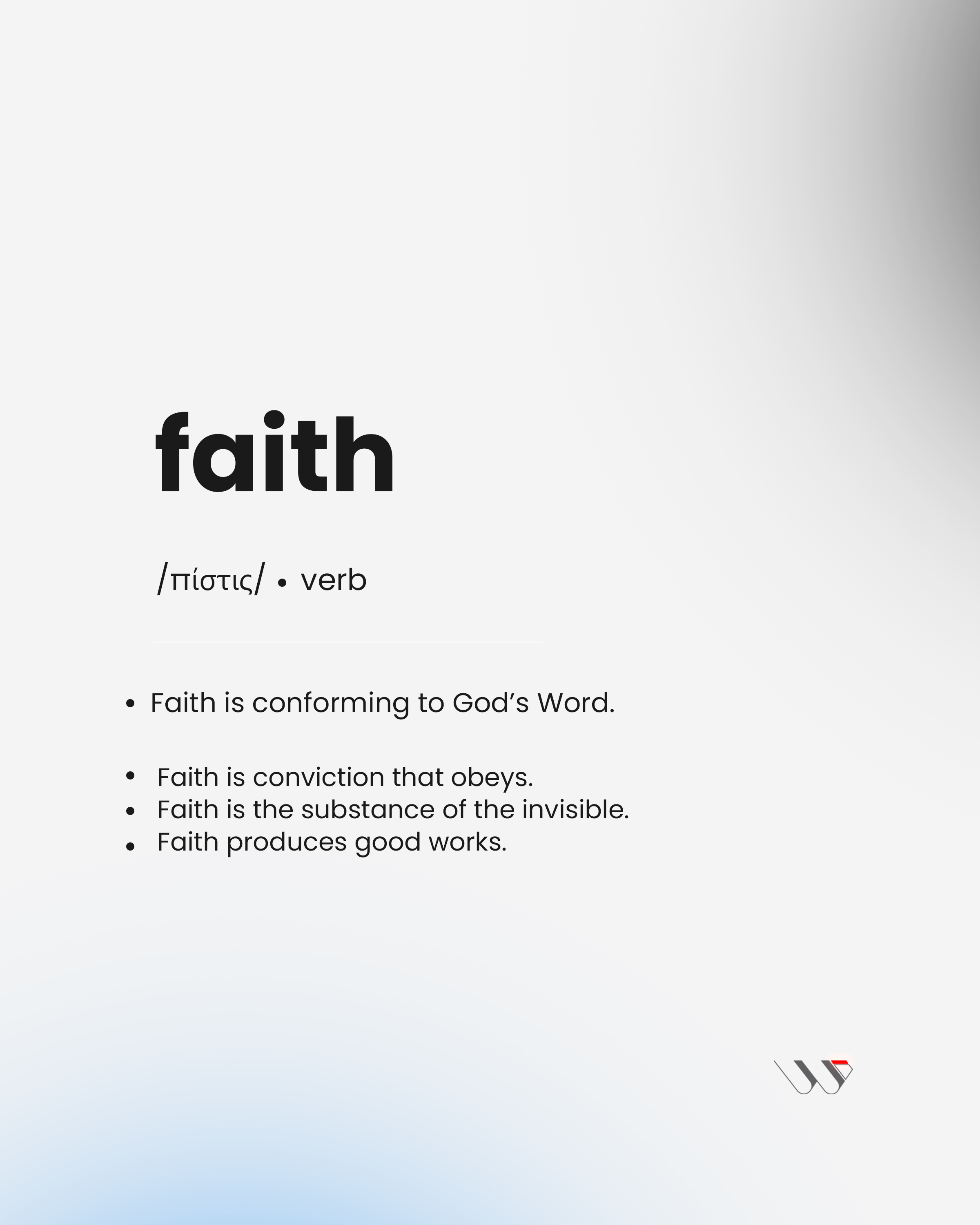
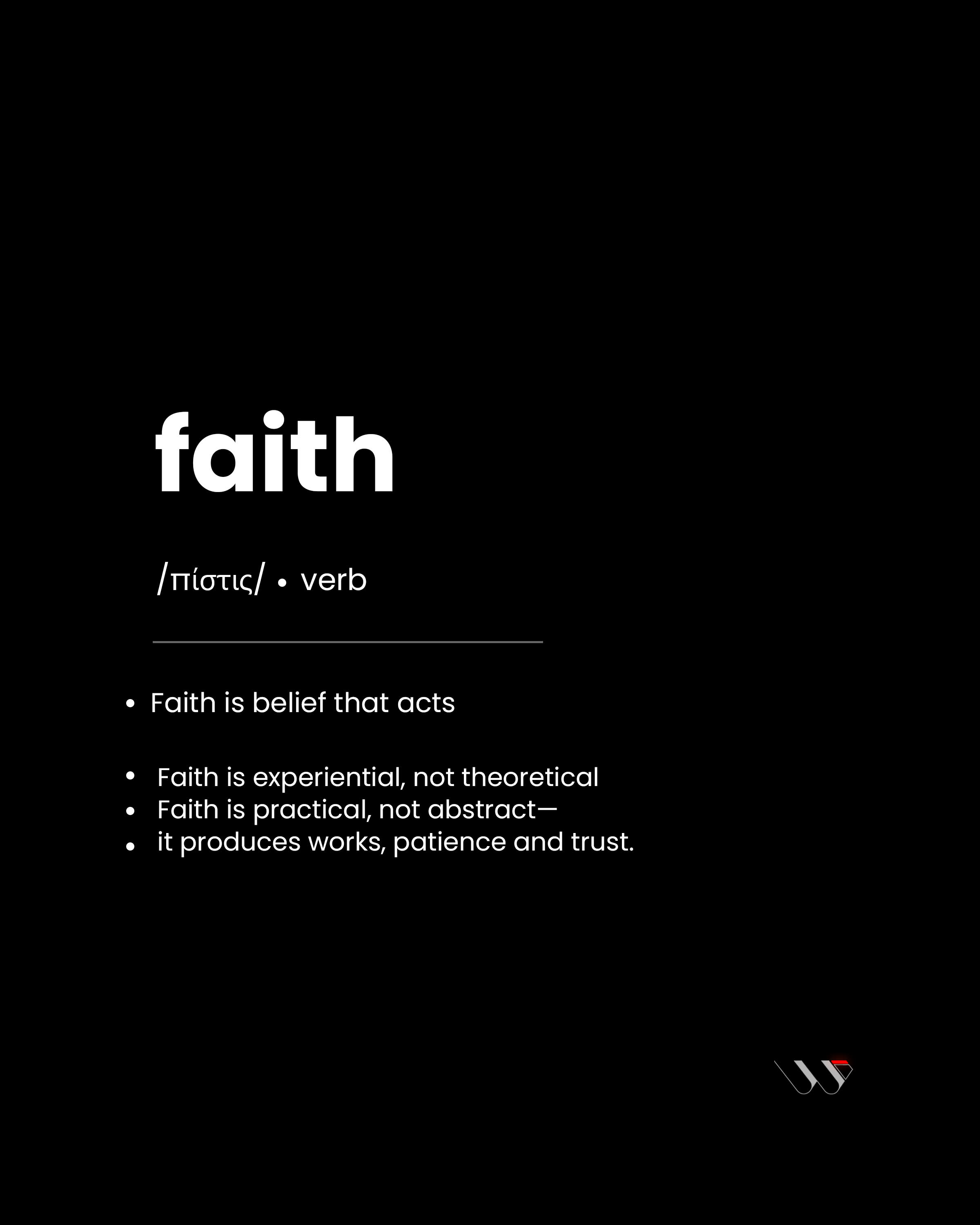
Have you ever been in a service where someone shares their testimony and, as they recount what they did—particularly when it was faith-driven—something leaps in your spirit? You nod your head and respond with a quiet, “hmmmmm.” This is because the tangibility of faith is real; it can be perceived. It can be felt, touched, and handled. That is why the writer of Hebrews described it as “the substance of things hoped for” (Hebrews 11:1). If it cannot move your conduct, character, and conviction, it is not faith.
But how does faith move into good works? How does belief become practice?
Faith must first be rooted in the Word. “So then faith cometh by hearing, and hearing by the word of God” (Romans 10:17). Faith is not imagination. It is not emotional excitement. It is conviction formed by truth. Without the Word, what we call faith becomes assumption—and assumption only produces guesswork, not good works.
Faith must also mature through obedience. Obedience moves us into action; it is the bridge between belief and manifestation. Abraham believed God, but his faith was demonstrated when he obeyed (Hebrews 11:8). Every step of obedience strengthens faith and clarifies direction. Small obediences prepare us for greater responsibilities. Jesus said, “He that is faithful in that which is least is faithful also in much” (Luke 16:10). Good works often begin in unseen faithfulness.
Faith must further be refined through process. Trials do not destroy faith; they purify it. “That the trial of your faith, being much more precious than of gold that perisheth…” (1 Peter 1:7). A tested faith produces stable and replicable works, not flukes. When conviction survives pressure, action becomes consistent. God is not forming occasional responders; He is forming dependable vessels.
Faith must finally be empowered by the Spirit. Good works are not sustained by human energy; they are empowered by divine grace. “For it is God which worketh in you both to will and to do of His good pleasure” (Philippians 2:13). Notice the order—He works in us before He works through us. The desire and the ability both come from Him.
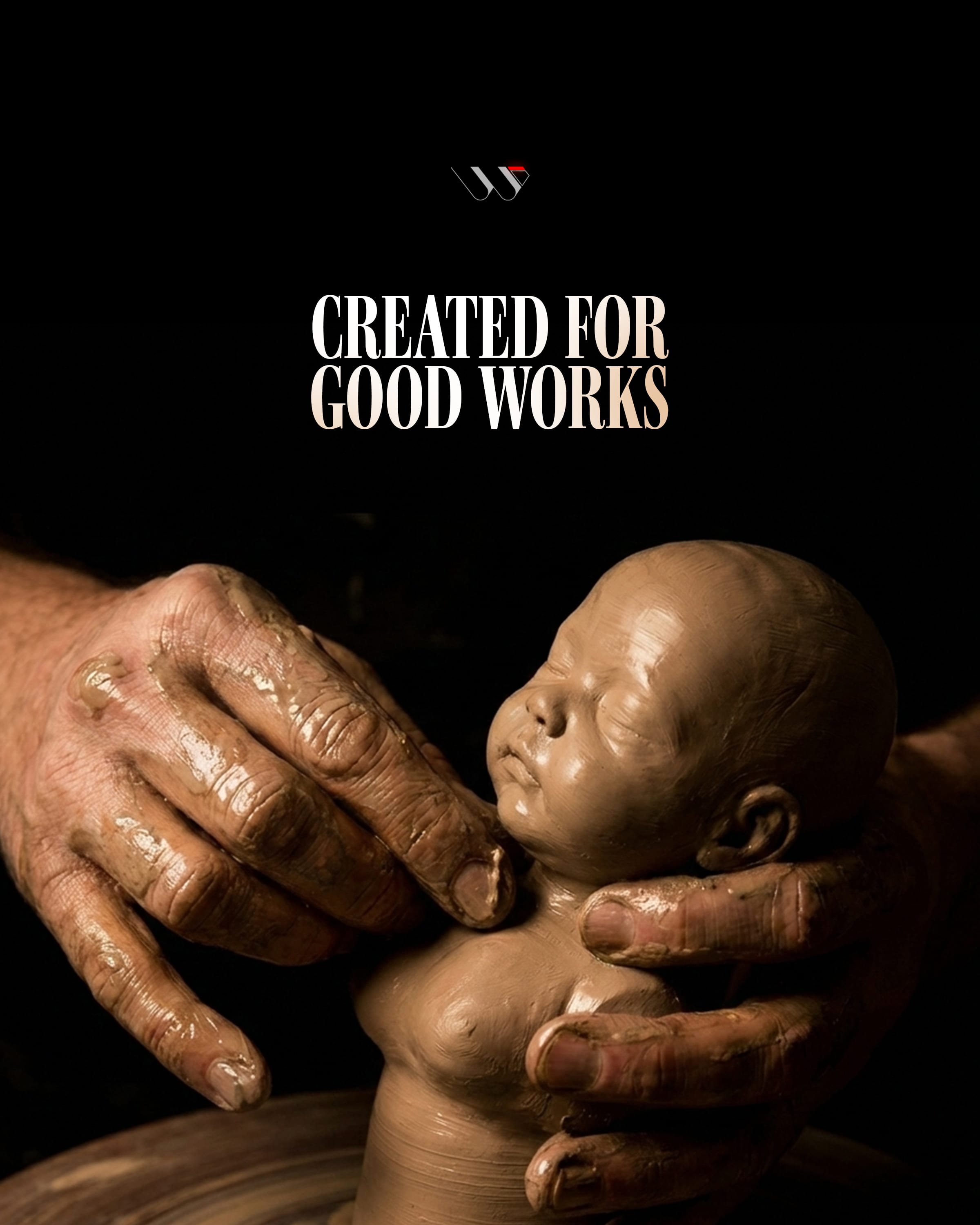
Good works are faith expressed in action—nothing more, nothing less. They are not attempts to earn God’s approval, but the natural overflow of a life aligned with His Word. When faith truly takes root, it cannot remain invisible; it moves, it obeys, it builds, it serves. “Even so faith, if it hath not works, is dead, being alone” (James 2:17). The works do not give life to faith; they reveal that faith is alive. We are “created in Christ Jesus unto good works” (Ephesians 2:10), meaning our obedience is not invention but participation in what God has already ordained. Where faith is genuine, good works will follow—quietly, consistently, and powerfully—until the invisible conviction within us becomes visible evidence before the world.



Comments
Please log in to comment.