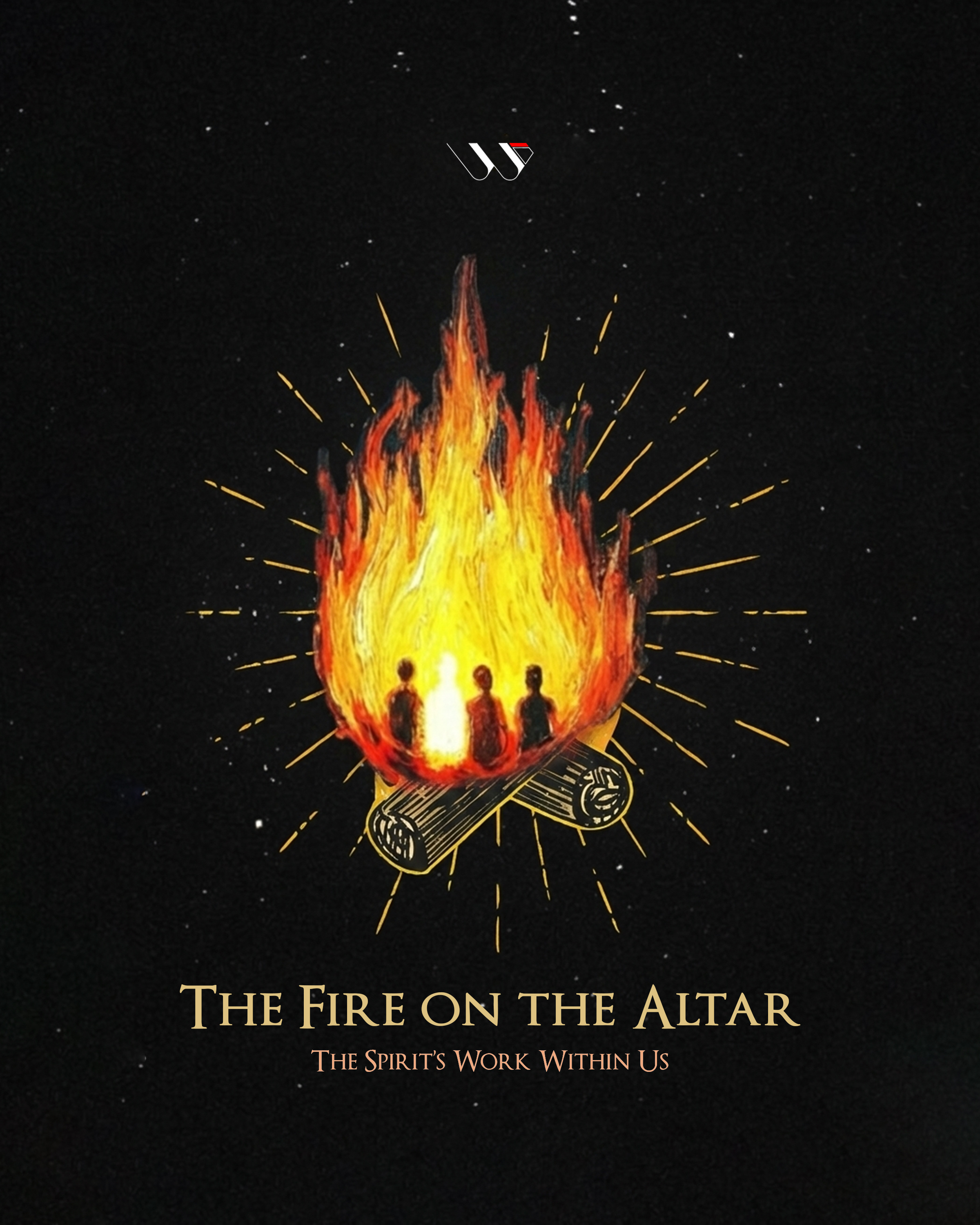
The Fire on the Altar: The Spirit’s Work Within Us
The altar was never complete without fire. Stones could be arranged, the wood set in order, and the sacrifice laid in place—but until fire fell, nothing was truly accomplished, “the fire of the LORD fell and consumed the burnt sacrifice” (1 Kings 18:38). Fire is the divine response, the unmistakable sign of God’s acceptance, presence and power. Yet, in the New Covenant, the fire no longer falls on stones and animals; it falls on people. Beyond a dramatic display, the fire on the altar symbolises something deeper: the baptism of the Spirit. John the Baptist declared, “One mightier than I is coming… He will baptise you with the Holy Spirit and fire” (Luke 3:16).
The administration of the fire of the Spirit works first within us before it works through us. Jesus at His ascension, promised the disciples so much: “These signs shall follow them that believe; In my name shall they cast out devils; they shall speak with new tongues. They shall take up serpents; and if they drink any deadly thing, it shall not hurt them; they shall lay hands on the sick, and they shall recover” (Mark 16:17-18). But His strict instruction was, “Tarry in the city of Jerusalem until you are endued with power from on high” (Luke 24:49). This is because His promises are only accessible by the power at work within us, “Now to Him who is able to do exceedingly abundantly above all that we ask or think, according to the power that works in us” (Ephesians 3:20).
On the day of Pentecost, the fire rested upon the disciples. “There appeared unto them cloven tongues like as of fire, and it sat upon each of them. And they were all filled with the Holy Ghost” (Acts 2:3–4). Fear was replaced with boldness, confusion with clarity, and weakness with power. The consumption of the sacrifice is not destructive to the believer; it is transformative—it mortifies the flesh, purifies the heart and ignites the spirit. The significance of His Spirit (fire) is as follows:
Presence
In Scripture, fire consistently represents the tangible presence of God. From the burning bush in Exodus 3 to the fire on Mount Carmel in 1 Kings 18, God reveals Himself through flames. Fire is not merely a symbol; it is a manifestation of divine nearness. “Our God is a consuming fire” (Hebrews 12:29). Where God’s presence is, fire follows—to reveal His holiness and draw us into deeper reverence. Also, for the destruction of every opposition on our path (Deuteronomy 9:3).
Purity
Before God empowers a man, He purifies him. Fire is God’s refining tool, cleansing the heart from pride, self-will, and hidden corruption. “He shall sit as a refiner and purifier of silver” (Malachi 3:3). Isaiah’s lips were touched with burning coal before he was sent (Isaiah 6:6–8). The Spirit’s fire does not condemn; it consecrates. Purity is unnegotiable for those who will carry divine presence.
Power
The fire of the Spirit is also a display of divine power. On the Day of Pentecost, “cloven tongues like as of fire” rested upon the disciples, and they were filled with the Holy Ghost (Acts 2:3–4). That fire is not for entertainment, but for empowerment. Fearful men became bold witnesses, and ordinary voices carried supernatural authority. God’s fire equips His people for effective ministry, turning weakness into strength and the performance of signs and wonders.
Passion
God’s fire ignites holy desire within the believer. Jeremiah described the Word of God as “a burning fire shut up in my bones” (Jeremiah 20:9). The Spirit kindles passion for righteousness, prayer, obedience, and intimacy with God. Where the fire burns, spiritual apathy dies. Fire transforms routine religion into living devotion and awakens a hunger that no earthly satisfaction can quench.
Purpose
Divine fire always leads to divine assignment. God does not set His altar ablaze for spectacle, but for service. Elijah’s fire brought national repentance. Pentecostal fire birthed the Church. Isaiah’s fire led to commissioning. When God answers by fire, it is because He intends to use what He has refined. Fire is not the end—it is the preparation for purpose.
When the fire has done its work within us, we do not beg for what heaven has released; we stand and command it by faith. As Scripture declares, “The kingdom of God is not in word, but in power” (1 Corinthians 4:20). Thus, answered prayer is not only God responding to us—it is God forming us to respond rightly to Him, ultimately, which makes prayer indeed a two-way communication. Continued…




Comments
Please log in to comment.