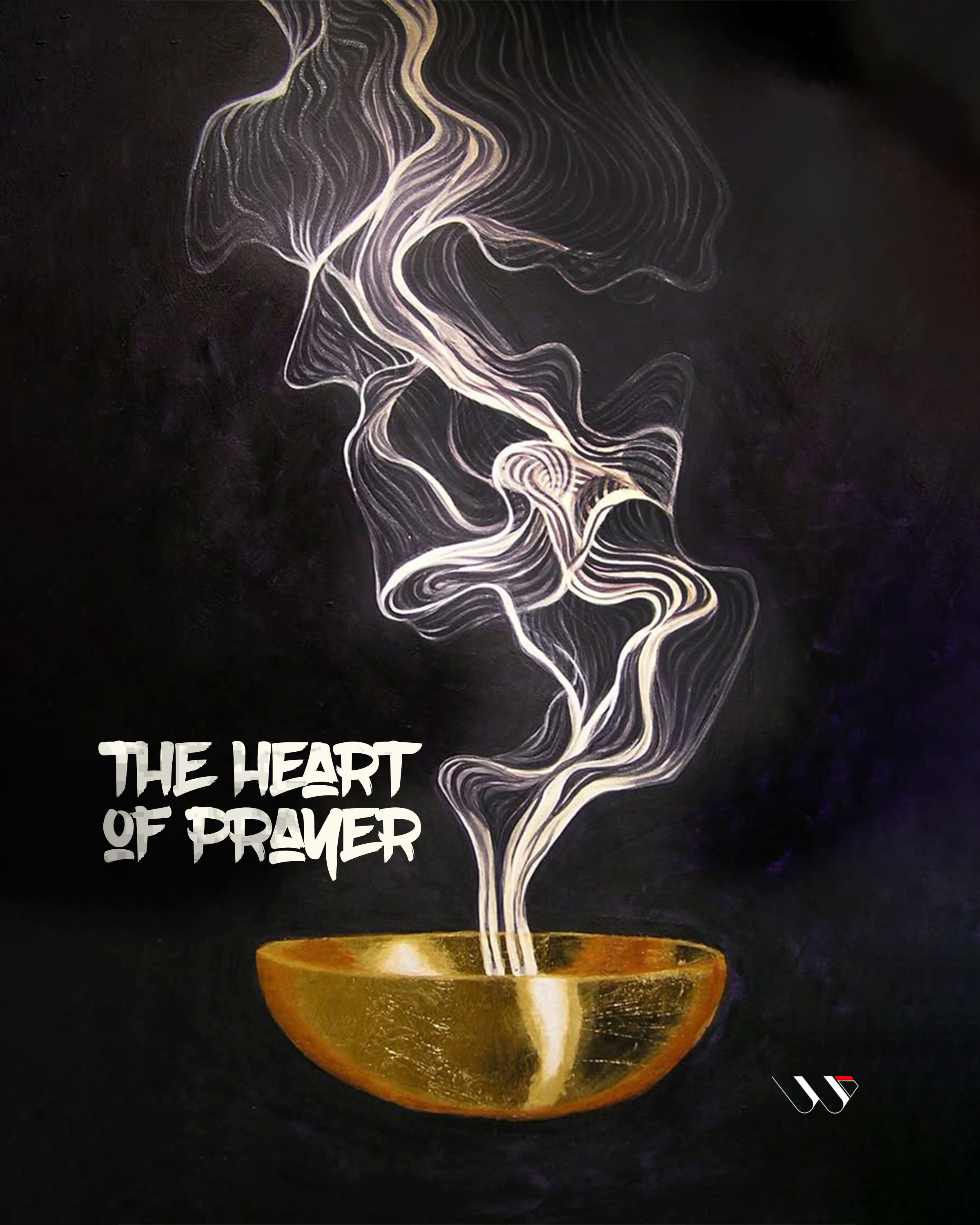
The Heart of Prayer
Prayer was never designed to be a presentation of words, but a posture of the heart. While the mouth may speak, it is the heart that truly communicates with God. Jesus warned against empty, repetitive speech, saying, “When you pray, do not use vain repetitions as the heathen do, for they think that they will be heard for their many words” (Matthew 6:7). This reveals a crucial truth: God is not moved by vocabulary in prayer, but by the depth of our surrender. Real prayer begins where words end—within the inner man.
Scripture teaches that prayer is first a heart-response before it is a verbal expression. Hannah prayed in such deep connection that her lips moved, but her voice was not heard, yet God answered her (1 Samuel 1:12–17). Her prayer was not loud, long, or eloquent, but it was earnest. God Himself affirms this principle: “This people draw near to Me with their mouth and honour Me with their lips, but their heart is far from Me” (Isaiah 29:13).
One can quote the right Scriptures and provide all the right reasons, yet the heart may remain far from God. This does not only speak about motive, but also about awareness and attention in the place of prayer. I have observed in myself—especially during organised prayers—that I may be speaking (“praying,” in quotes), yet my mind is so far away that I must consciously pull my thoughts back to the present. It is even easier to drift when praying in tongues. This, too, reflects Isaiah 29:13: “This people draw near to Me with their mouth… but their heart is far from Me.”
This is why Jesus gave special teachings to correct our understanding of prayer. Prayer is primarily about the secret place—the engine room. It is a heart-to-mind connection with God. In computer science, we call it the Client–Server network model. Heaven does not respond to pious postures; it responds to spiritual alignment. When the heart is engaged, even a whisper carries weight. When the heart is absent, every second spent in prayer becomes noise.
There are moments when we’ve exhausted words, or words fail to express what the soul feels. In such seasons, the Holy Spirit becomes our voice. “Likewise the Spirit also helps in our weaknesses. For we do not know what we should pray for as we ought, but the Spirit Himself makes intercession for us with groanings which cannot be uttered” (Romans 8:26). Praying in the Spirit is not about oration; it is about utterance (Acts 2:4). It is communion beyond vocabulary.
Whether through tongues or deep inner groanings, a heart connection allows God’s will to flow through us by bypassing the frailties of the human mind. “For he who speaks in an unknown tongue speaks not unto men, but unto God… howbeit in the spirit he speaks mysteries” (1 Corinthians 14:2).
True prayer is not found in the volume of our voices or the length of our petitions, but in the posture of our hearts. Yet, when the Spirit leads, and the heart responds, prayer becomes more than communication—it becomes intimacy. Prayers sustained by the Spirit are what we term long prayers: not rushed, yet never empty. “Praying always with all prayer and supplication in the Spirit” (Ephesians 6:18).
Continued…






Comments
Please log in to comment.