Persistent in Prayers
I had already prepared to write a piece titled “Length × Depth × Weight in Prayer,” but I felt a strong impression to write this first. So, consider this a bonus piece. Here it goes:
Jesus taught, “When you pray, use not vain repetitions, as the heathen do: for they think that they shall be heard for their much speaking” (Matthew 6:7). At face value, this might seem like a rebuke of repeated or prolonged prayers. However, Jesus was not opposing repetition itself—He was correcting vain repetition.
A practical example of vain repetition in prayer is: “God hear, God answer; God hear, God answer,” repeated endlessly (it sounds even better in Yoruba). Another example is, “Bless me, bless me, bless me.” One might ask, what’s wrong with that? Scripture answers: “The hand of the Lord is not shortened, that it cannot save; neither is His ear heavy, that it cannot hear” (Isaiah 59:1). So, what should we do instead? “Present your case to the LORD. Bring forth your strong reasons” (Isaiah 41:21).
While studying my Bible, I came across the phrase, “And Isaac intreated the LORD for his wife” (Genesis 25:21). Some translations use the word prayed, but the King James Version uses intreated. I looked up the Hebrew root word Āṯar, which means to pray earnestly, to press God persistently and repeatedly. From the surrounding verses, we understand that Isaac’s prayer was not only earnest—it was also persistent. He married Rebekah at forty (Genesis 25:20), and Esau and Jacob were born when he was sixty (Genesis 25:26). Even if they realised their barrenness in the second year of marriage, Isaac still prayed persistently and repeatedly for about eighteen years.
Jesus reinforced this principle in Luke 18, beginning with the statement: “Men ought always to pray, and not to faint.” He told the parable of a widow who repeatedly appealed to an unjust judge. Though the judge neither feared God nor respected people, he granted her request because of her persistence. Jesus explained that if even an unjust judge responds to persistence, how much more will God answer His children who cry to Him day and night.
Yet, many believers have been unconsciously conditioned to give thanks and give up when answers are delayed. This parable teaches us not to lose heart, but to remain in prayer until the answer comes—whether through divine intervention or divine instruction. We see this in the early church when Herod imprisoned Peter with the intention of killing him. The church prayed without ceasing until Peter arrived at the door (Acts 12:1–18). Daniel also prayed persistently for twenty-one days before receiving insight into Israel’s future (Daniel 10:2–14).
Persistent prayers are most effective when they are also specific. On Mount Carmel, Elijah prayed persistently and specifically for one defined thing—rain (1 Kings 18:42–44). Nothing delays response in prayer like indecision and ambiguity. After Bartimaeus cried out repeatedly, “Jesus, Son of David, have mercy on me!” Jesus stopped and asked, “What do you want Me to do for you?” Bartimaeus replied, “Lord, that I may receive my sight.” His clarity met Christ’s power. Persistence alone is not enough—prayer must also be precise.
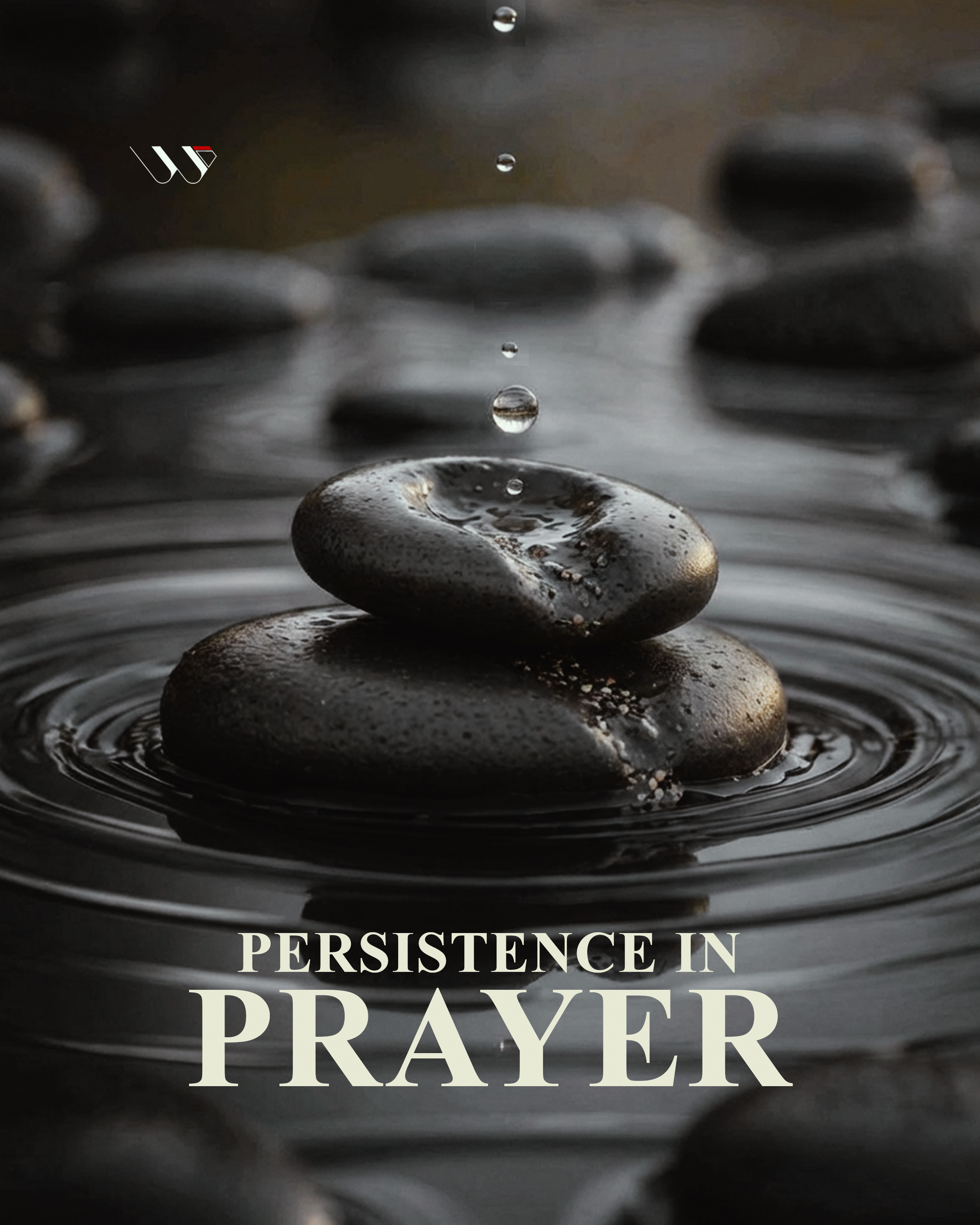
Just like a drop of water on a rock, each moment of prayer may seem weak at first. But as the water keeps striking the same spot—again and again—it slowly wears down even the hardest surface. Persistent prayer is not noise; it is mounting pressure. It is the steady, focused insistence of faith that refuses to retreat until heaven responds. God is not moved by empty words, but He honours earnest hearts that pray with clarity, conviction, and continuity.
When prayer carries length (consistency) and depth (sincerity), it gains weight (spiritual authority). And like water shaping stone, persistent prayer reshapes outcomes. Continued…






Comments
Please log in to comment.