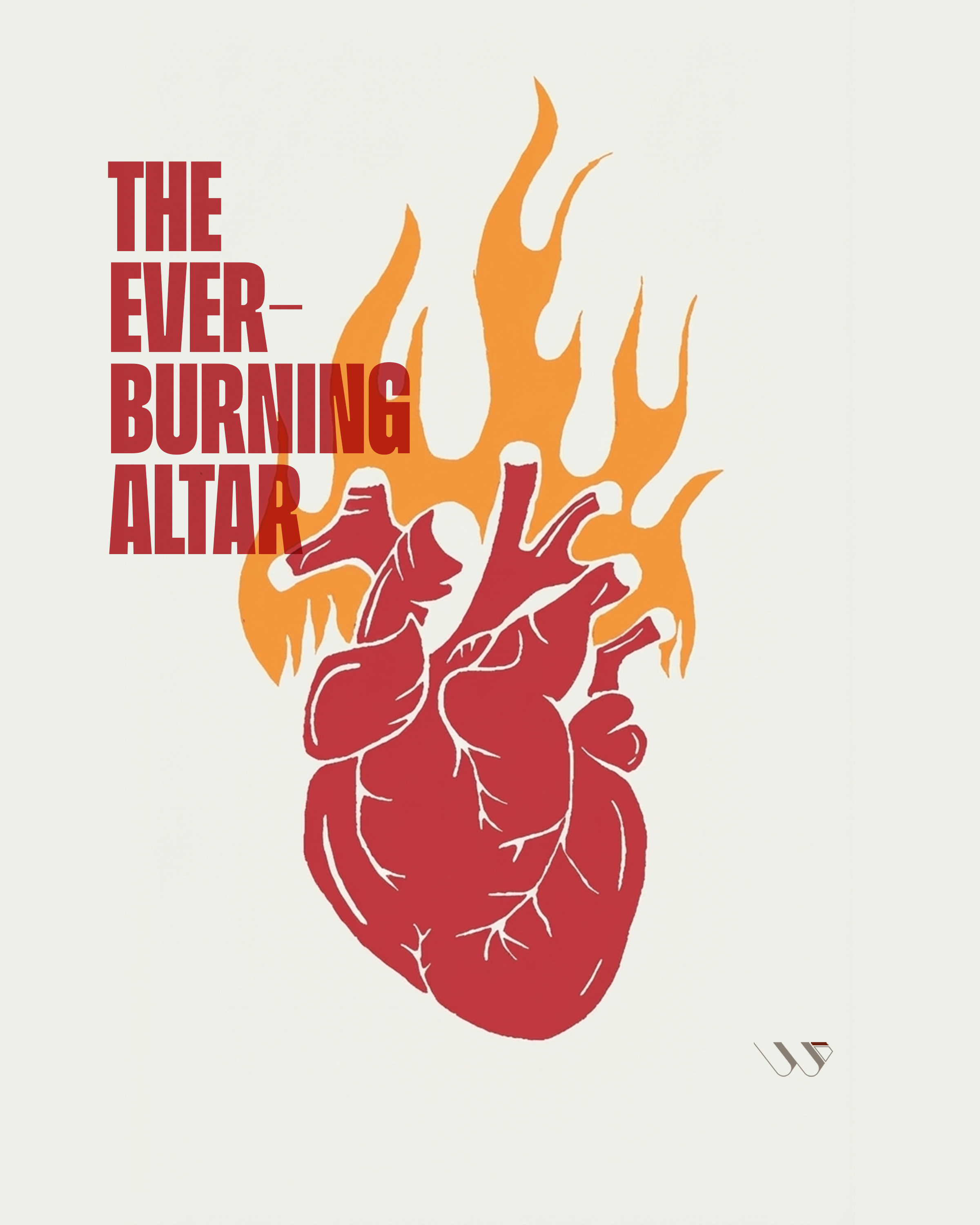
The Ever-Burning Altar
The fire on our altar is not ordained to be a once-and-for-all encounter but a time-and-again experience. If the fire on the altars of our hearts must be kept burning, then we have the responsibility to sustain it. God gave Israel a clear instruction concerning the sacred fire: “The fire on the altar shall be kept burning on it; it shall not be put out” (Leviticus 6:13). This command reveals that divine fire was never designed to be temporary; it was meant to be continual.
This command also reveals that the baptism of the Spirit is not auto-sustained but requires continual attention, devotion and discipline. The believer who desires lasting intimacy with God must learn not only how to receive His fire, but how to keep it burning.
It is commonly acknowledged that prayer plays a vital role in keeping the fire on our altars burning—and this is absolutely correct. However, Leviticus 6:12–13 gives us a clearer and more complete divine order: “The fire upon the altar shall be burning in it; it shall not be put out: and the priest shall burn wood on it every morning, and lay the burnt offering in order upon it; and he shall burn thereon the fat of the peace offerings.” This passage reveals two essential requirements for sustaining the fire: the continual burning of wood and the orderly presentation of sacrifice.
While the sacrifice of prayer (as explored in previous pieces) is crucial, Scripture places primary emphasis on the burning of wood. In biblical symbolism, wood represents the Word of God—stable, enduring, and fuel for spiritual fire. In prayer, we offer ourselves first, then our desires on which the fire falls (Acts 2:3), but the Word is the fuel that keeps the fire alive. Without wood, even the best sacrifice will burn out.
Although prayer and the Word are not independent of each other, divine order gives precedence to the Word before prayer (1 John 5:14). The altar must first be supplied with the Word before it can sustain flame. This teaches us that spiritual fire is not maintained by emotional intensity alone, but by consistent exposure to the truth (knowledge of God). Prayer expresses our devotion; the Word preserves our ignition.
The fire on the altar is sustained through continual fellowship with God’s Word. Just as the priests were instructed to add wood daily to the altar, we too must supply our hearts with spiritual fuel. “Man shall not live by bread alone, but by every word that proceedeth out of the mouth of God” (Matthew 4:4). The Word renews our minds and realigns our desires with God’s will (Romans 12:2). When Scripture becomes our daily nourishment, spiritual fire is preserved, and our walk with God remains vibrant rather than routine.
Prayer keeps the fire alive by maintaining our sensitivity to God’s presence. Prayer is not merely communication; it is communion. Through prayer, we stay conscious of God’s nearness and responsive to His will. “Praying always with all prayer and supplication in the Spirit” (Ephesians 6:18). A prayerless life leads to spiritual lukewarmness, but a prayerful life keeps the altar on fire. When prayer flows from accurate revelation and sincere relationship rather than obligation, the fire of devotion remains steady.
In addition, obedience fuels the fire of divine presence. God’s fire rests where His will is honoured. Jesus said, “If you love Me, keep My commandments” (John 14:15). Obedience is not legalism; it is love expressed through action. When we align our choices with God’s instructions, we create an environment where His Spirit is comfortable to remain. Disobedience dims spiritual fire, but obedience preserves it.
Finally, a heart of worship keeps the altar sacred. Worship shifts our focus from ourselves to God. “God is a Spirit: and they that worship Him must worship Him in spirit and in truth” (John 4:24). True worship is not limited to songs—it is a lifestyle of honour, reverence, and surrender. When worship becomes our posture, the fire of God’s presence is not just experienced, but sustained.
The fire on our altar is sustained not by momentary encounters, but by daily devotion. God has already supplied the fire; our responsibility is to keep the altar prepared. When the Word we observe is continually laid upon our hearts, and the living sacrifice of prayer and worship rises, the flame of His presence remains active within us. A burning altar produces a burning life—one marked by intimacy, obedience, and divine power. For where the fire is kept, the glory of God is preserved.



Comments
Please log in to comment.