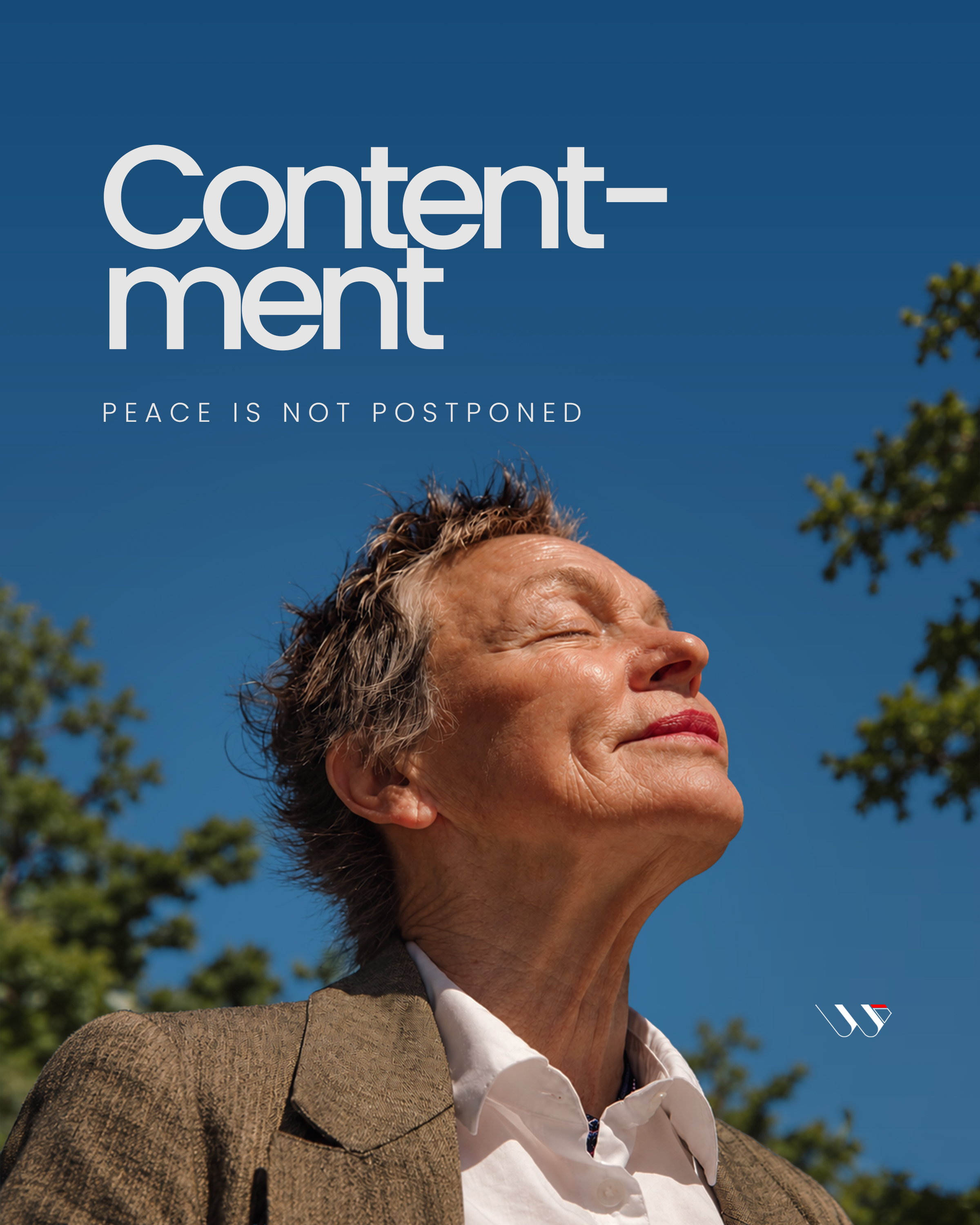
Contentment: Peace Is Not Postponed
Human desire can appear almost endless; there is often something else to want. A better job, a larger house, more money, a newer device or gadget, greater recognition, another opportunity, a relationship, marriage, children, influence, comfort or simply the next stage of life. Desire itself is not wrong, and there is nothing inherently unspiritual about wanting improvement. The problem begins when we become unable to appreciate what God has already placed in our hands because our attention is continually fixated on what is still missing.
This is where contentment becomes an important Christian virtue. Contentment is not the absence of desire or ambition. It is the inward stability that allows us to appreciate what we presently have without allowing what we do not have to dictate our peace. Paul writes, “I have learned, in whatsoever state I am, therewith to be content” (Philippians 4:11). The word learned is important. Contentment was not something Paul simply possessed by temperament; it was something walking with God had taught him.
Contentment Must Be Learned
Paul continues, “I know both how to be abased, and I know how to abound: every where and in all things I am instructed both to be full and to be hungry, both to abound and to suffer need” (Philippians 4:12). His contentment was not dependent on one particular condition. He had learnt how to live with abundance without becoming controlled by it and how to live with scarcity without allowing scarcity to dampen his confidence in God.
This gives important context to the familiar verse, “I can do all things through Christ which strengtheneth me” (Philippians 4:13). Paul was not merely speaking about achieving anything imaginable; he was describing Christ's strength enabling him to remain steady through very different circumstances. That is part of the power of contentment. It gives us the ability to say, “I would like this situation to improve, but I do not have to become despondent until it does.”
Contentment and Comparison
One of the greatest enemies of contentment is comparison. You might have been genuinely grateful in scarcity until you saw what you lack in someone else's abundance. Your house seemed sufficient until you entered theirs. Your career appeared to be progressing until someone younger advanced more quickly. Your relationship seemed beautiful until social media presented another person's carefully selected moments.
Nothing about your situation necessarily changed. What changed was the measure you began comparing it with. Paul warns that those who “measuring themselves by themselves, and comparing themselves among themselves, are not wise” (2 Corinthians 10:12). Comparison has a way of making genuine blessings appear inadequate.
This does not mean another person's progress should never inspire us. We can learn from others, pursue growth and recognise areas where our lives can improve. The problem begins when someone else's blessing becomes evidence in our minds that our own life is insufficient. Contentment allows us to celebrate what God is doing in another person's life without interpreting it as an accusation against ours.
Contentment and Possessions
Scripture speaks particularly strongly about contentment in relation to material things. Paul writes, “Godliness with contentment is great gain. For we brought nothing into this world, and it is certain we can carry nothing out” (1 Timothy 6:6–7).
He then warns that “the love of money is the root of all evil” and that some, through their desire for wealth, had “pierced themselves through with many sorrows” (1 Timothy 6:10). Money itself is not condemned. The danger is allowing the pursuit of it to gain control over the heart. Hebrews gives a similar instruction: “Let your conversation be without covetousness; and be content with such things as ye have” (Hebrews 13:5). Interestingly, the reason immediately follows: “For he hath said, I will never leave thee, nor forsake thee.”
The foundation of Christian contentment is therefore not merely, “I have enough things.” It is, “I have Jesus”—the One in whom our otherwise insatiable desires find their highest and truest satisfaction.
Possessions can increase and decrease. Opportunities can come and go. Circumstances can change suddenly. But there is One [Jesus Christ] who is “the same yesterday, and today, and forever” (Hebrews 13:8). The presence and faithfulness of God give the believer something more stable upon which to rest.
Contentment Is Not Complacency
Contentment must not be confused with complacency. A content person can still work towards a promotion, save for a better home, build a business, pursue education, or pray for a different season. Contentment does not say, “Nothing should ever improve.” It says, “My peace will not be postponed until everything improves.”
There is an important difference between pursuing something from a place of purpose and pursuing it from a place of dissatisfaction. Paul was extremely ambitious in his calling. He said, “I press toward the mark for the prize of the high calling of God in Christ Jesus” (Philippians 3:14). Yet this was the same man who said he had learnt to be content.
Contentment and progress can coexist. You can be grateful for where you are while working towards where you believe God is leading you. You can desire more without despising what you presently have.
When Desire Becomes “I Must Have It”
Contentment becomes especially important when a legitimate desire begins to feel like a necessity for happiness. There is a significant difference between saying, “I would like to marry you,” and believing, “I cannot have a meaningful life until I marry you.” There is a difference between wanting greater financial stability and believing money is the only thing capable of making a secure life. There is a difference between desiring recognition and needing recognition before you feel visible and valuable.
Sometimes the problem is not what we desire, but the authority we have given that desire. Jesus warned, “A man's life consisteth not in the abundance of the things which he possesseth” (Luke 12:15). Life cannot finally be reduced to what we acquire. The contented heart can desire without becoming enslaved to desire.
Contentment And Covetousness
The tenth commandment says, “Thou shalt not covet” (Exodus 20:17). Covetousness goes beyond noticing what another person has. It is the inward craving that becomes dissatisfied with our own portion because we want to take theirs. This can enter almost every area of life. We can covet another person's possessions, marriage, appearance, influence, opportunities, family, ministry or success.
David writes, “The LORD is my shepherd; I shall not want” (Psalm 23:1). This does not mean David never experienced need or desire. Rather, his confidence in the Shepherd changed the way he interpreted what he lacked. Contentment trusts that God knows both what we need and when we need it.
That trust does not eliminate responsibility. We still work, plan, ask, seek and make wise decisions. But we do not need to live in continual anxiety as though everything depends entirely upon our ability to secure the next thing. Jesus said, “Your heavenly Father knoweth that ye have need of all these things” (Matthew 6:32), and then instructed His hearers to “seek ye first the kingdom of God, and his righteousness” (Matthew 6:33). Contentment restores proper order to our desires.
Gratitude Feeds Contentment
Contentment grows where gratitude is practised. It is difficult to remain continually dissatisfied while deliberately remembering what God has already done. This is why Scripture repeatedly calls believers to thanksgiving. Paul writes, “In every thing give thanks: for this is the will of God in Christ Jesus concerning you” (1 Thessalonians 5:18).
He does not say to give thanks for every painful circumstance, but in everything. Gratitude teaches us to recognise that even an imperfect season still contains evidence of God's goodness. The dissatisfied mind continually seeks “what is missing.” Gratitude asks, “What has already been given?” Sometimes both questions are legitimate, but whichever one dominates our attention will greatly influence our satisfaction in life.
Contentment in Seasons
Contentment also affects the way we handle different seasons of life. A single person can become so consumed with marriage that singleness feels like a waiting room rather than a preparation season. A married person can become preoccupied with what their spouse lacks and stop appreciating what they bring. Parents may compare their children with others. Friends can become resentful when someone else's life appears to progress more quickly.
Contentment does not prevent us from acknowledging real difficulties. It simply prevents those difficulties from swallowing every good thing around them. Ecclesiastes says, “Every man should eat and drink, and enjoy the good of all his labour, it is the gift of God” (Ecclesiastes 3:13). There is something deeply spiritual about learning to receive today's portion without continually postponing gratitude until tomorrow becomes different.
Contentment Is Ultimately Trust
At its deepest level, contentment is an expression of trust. It says that even though I do not possess everything I desire, my life is not outside God's attention. It trusts that a delay does not necessarily mean denial or abandonment, another person's blessing does not mean God has forgotten or forsaken us, and having less in one season does not make our lives less valuable. Contentment gives us the freedom to enjoy what is present without being continually controlled by what is absent.
Jesus asks, “Is not the life more than meat, and the body than raiment?” (Matthew 6:25). He was teaching His disciples to see life as something larger than the constant pursuit of what must be acquired next. Contentment gives us the freedom to enjoy what is present without being continually controlled by what is absent.
It does not eliminate desire. It places desire in its proper place. And it does not require us to pretend that every circumstance is ideal. It simply teaches us that our peace and gratitude need not wait for our circumstances to change. Paul said, “I have learned, in whatsoever state I am, therewith to be content.”
Perhaps that is the invitation for us as well: to keep growing, keep praying, keep working and keep believing for better where necessary, while still learning to recognise that the life God has given us today contains things worthy of thanksgiving.






Comments
Please log in to comment.