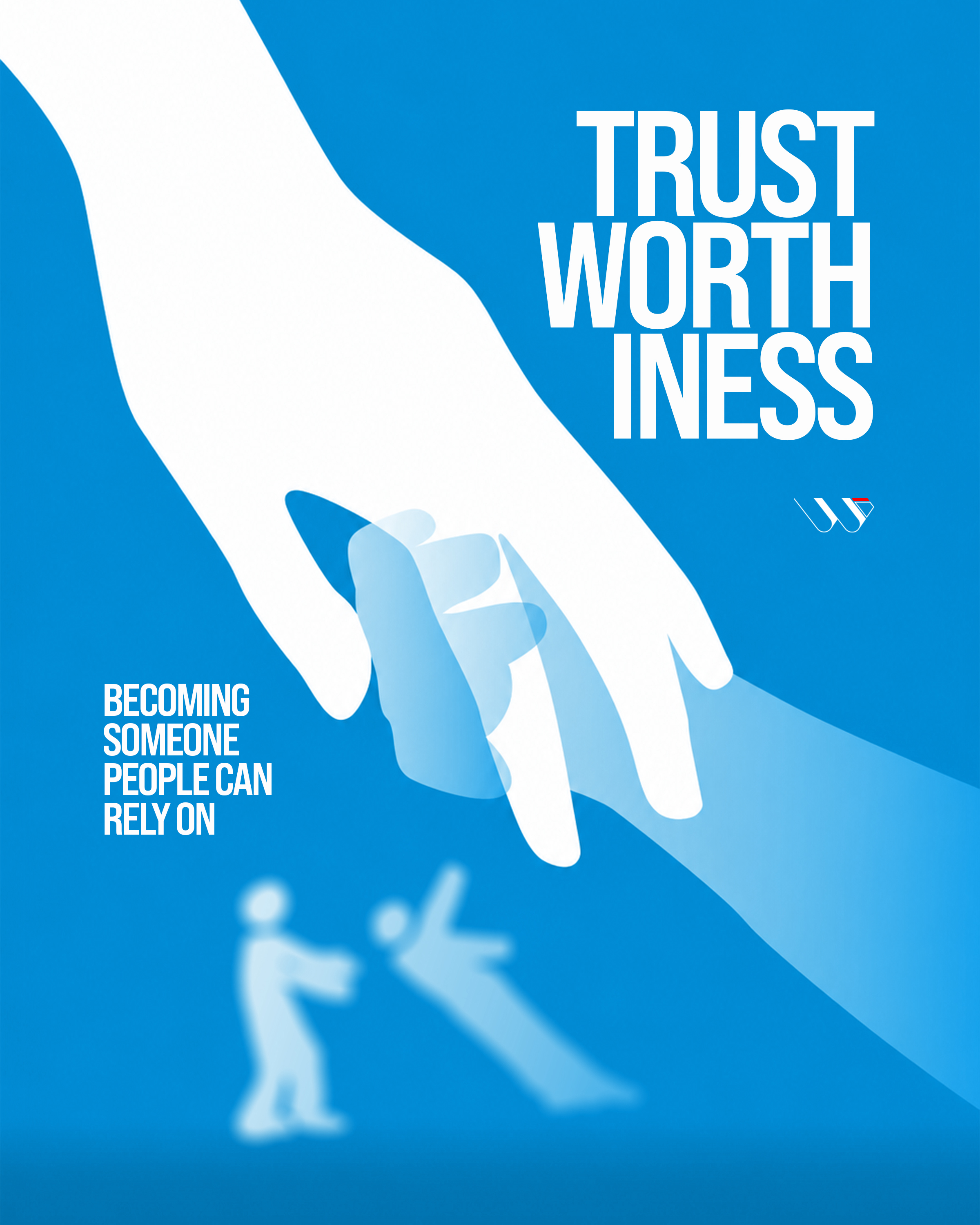
Trustworthiness: Becoming Someone People Can Rely On
Trustworthiness is fundamentally about character: becoming the kind of person whose words and actions align. If we say yes, people should reasonably expect a yes; if we make a commitment, our actions should reflect it and show we meant it. Jesus said, “Let your communication be, Yea, yea; Nay, nay” (Matthew 5:37). Our character should be consistent enough that people can take our words seriously without constant assurances, explanations, or suspicion.
This does not mean that a trustworthy person never makes mistakes or encounters circumstances beyond their control. It means they value truth, responsibility, and consistency enough that people can rely on them safely. Paul writes, “Moreover it is required in stewards, that a man be found faithful” (1 Corinthians 4:2). Whether what has been entrusted to us is a task, money, information, a relationship or simply our own word, faithfulness should determine how we handle it.
Let Your Word Carry Weight
I must acknowledge that this is an area I have found personally demanding. In my desire to stay optimistic, help people, or fit one more thing into an already crowded schedule, I have sometimes made promises, set deadlines, or given timeframes I eventually could not meet. The intention may have been good, but the result doesn't signal dependability. If someone repeatedly hears, “I will get this done,” but learns the words don't reliably predict the outcome, good intentions alone cannot preserve trust.
Trust begins with truthfulness. Once people repeatedly discover our words cannot be relied upon, every other part of the relationship becomes frictional. Proverbs says, “Lying lips are an abomination to the LORD: but they that deal truly are his delight” (Proverbs 12:22).
Sometimes trustworthiness is as simple as refusing to say what we cannot reasonably stand behind. It means admitting, “I forgot,” rather than inventing excuses or saying, “I cannot do this,” rather than promising what we know we are unlikely to fulfil; and communicating honestly when circumstances genuinely prevent us from keeping a commitment.
Psalm 15 describes a person of integrity as one who “sweareth to his own hurt, and changeth not” (Psalm 15:4). Sometimes, keeping our word becomes inconvenient. Trustworthiness is revealed when inconvenience does not automatically make our commitments disposable.
The answer, however, is not to become pessimistic, passive, or afraid to commit to anything simply to avoid disappointing anyone. Rather, we need discipline in our promises. We should learn to assess our capacity honestly, leave room for realities we can reasonably anticipate, communicate early when circumstances change and, as much as lies within our power, do what we said we would do. Optimism is valuable, but it should be accompanied by reliability.
Faithful in the Little Things
Jesus said, “He that is faithful in that which is least is faithful also in much” (Luke 16:10). Trustworthiness is often established long before major responsibilities arrive. It is built through ordinary acts of consistency.
If you say you will call, call. If you borrow something, return it. If you agree to meet at a particular time, respect the other person's time. If you accept a responsibility, don't make others chase you until it's done. And when something genuinely prevents you from doing what you promised, communicate instead of evading.
These things may appear small, but repeated small experiences teach people whether our words carry weight. We often want to be trusted with important assignments, leadership, or resources, yet we usually demonstrate dependability first in less visible responsibilities.
Daniel provides a remarkable picture of this. His enemies searched for something in the way he handled the affairs entrusted to him that they could use against him, “but they could find none occasion nor fault; forasmuch as he was faithful” (Daniel 6:4). His relationship with God did not make him careless about practical responsibility. His spirituality produced reliability.
Trusted With What Belongs to Others
Trustworthiness matters even more when someone places something belonging to another person in our hands. This may be money, property, information, an opportunity or authority.
Joseph understood this when Potiphar entrusted his household to him. When Potiphar's wife tempted him, Joseph said, “He hath committed all that he hath to my hand” (Genesis 39:8). He recognised that access created responsibility.
A trustworthy person does not use access to exploit others. If you are entrusted with money, you should account for it properly. If you are given authority, it should not become a tool for personal advantage. If someone lends you something, you should care for it as if it belonged to someone else.
The principle is simple: what happens to things when they enter our hands? Do they become safer or more vulnerable?
Trusted With People's Vulnerability
Trustworthiness also governs how we handle personal information. Proverbs says, “A talebearer revealeth secrets: but he that is of a faithful spirit concealeth the matter” (Proverbs 11:13).
When someone shares a personal struggle, family matter, weakness, or painful experience, they give us more than information; they give us access to something sensitive in their life. Christian etiquette should prevent us from casually turning that vulnerability into conversation material, forwarded messages or entertainment for others.
There are occasions where safety, abuse, serious wrongdoing or responsibility may require involving the appropriate people. But generally, not every story we know is ours to tell.
A trustworthy person knows how to carry information without needing to display the privilege of having received it.
Trustworthiness in Relationships
Trust is essential to healthy relationships because closeness requires a measure of safety. In marriage, a spouse should reasonably expect truthfulness, faithfulness and consistency. In dating, trustworthiness helps reveal whether someone's words about commitment match their behaviour. In friendships, it means knowing that what you share privately will not suddenly become public when the friendship faces difficulty.
The same principle applies in families, work and ministry. People should not have to constantly wonder whether we will fulfil our responsibilities, mishandle their resources, expose their confidence or behave differently in their absence.
This is why trustworthiness cannot be separated from integrity. Who we are when nobody is watching should match who we claim to be when everyone is watching.
When Trust Is Broken
Trust may take a long time to build and yet be damaged quickly. Proverbs describes “confidence in an unfaithful man in time of trouble” as “a broken tooth, and a foot out of joint” (Proverbs 25:19). Both fail precisely when support is needed.
That is why an apology doesn't always restore trust immediately. Forgiveness may be extended, but trust is usually rebuilt over time through evidence of changed behaviour. A person who has broken trust should not simply demand, “You must trust me again.” They should be willing to become trustworthy again.
Trust is rebuilt through the same things that established it: truth, consistency, responsibility, and time.
Becoming Trustworthy
God Himself is repeatedly described as faithful. Moses calls Him “the faithful God, which keepeth covenant” (Deuteronomy 7:9). We can trust Him because His character and His Word do not contradict one another.
As His character is formed in us, that reliability should become increasingly visible in our lives. Can people trust our words? Can they trust us with an assignment, money, confidential information or responsibility? Can those closest to us depend on us when circumstances become inconvenient?
Trustworthiness is not perfection. It is a settled commitment to truth, responsibility and faithfulness. When we fail, what do we do? Do we take responsibility, communicate honestly and correct the course where necessary?
Ultimately, a trustworthy Christian should become someone whose yes increasingly means yes, whose word carries weight, and whose conduct gives people good reason to believe what they say.





Comments
Please log in to comment.