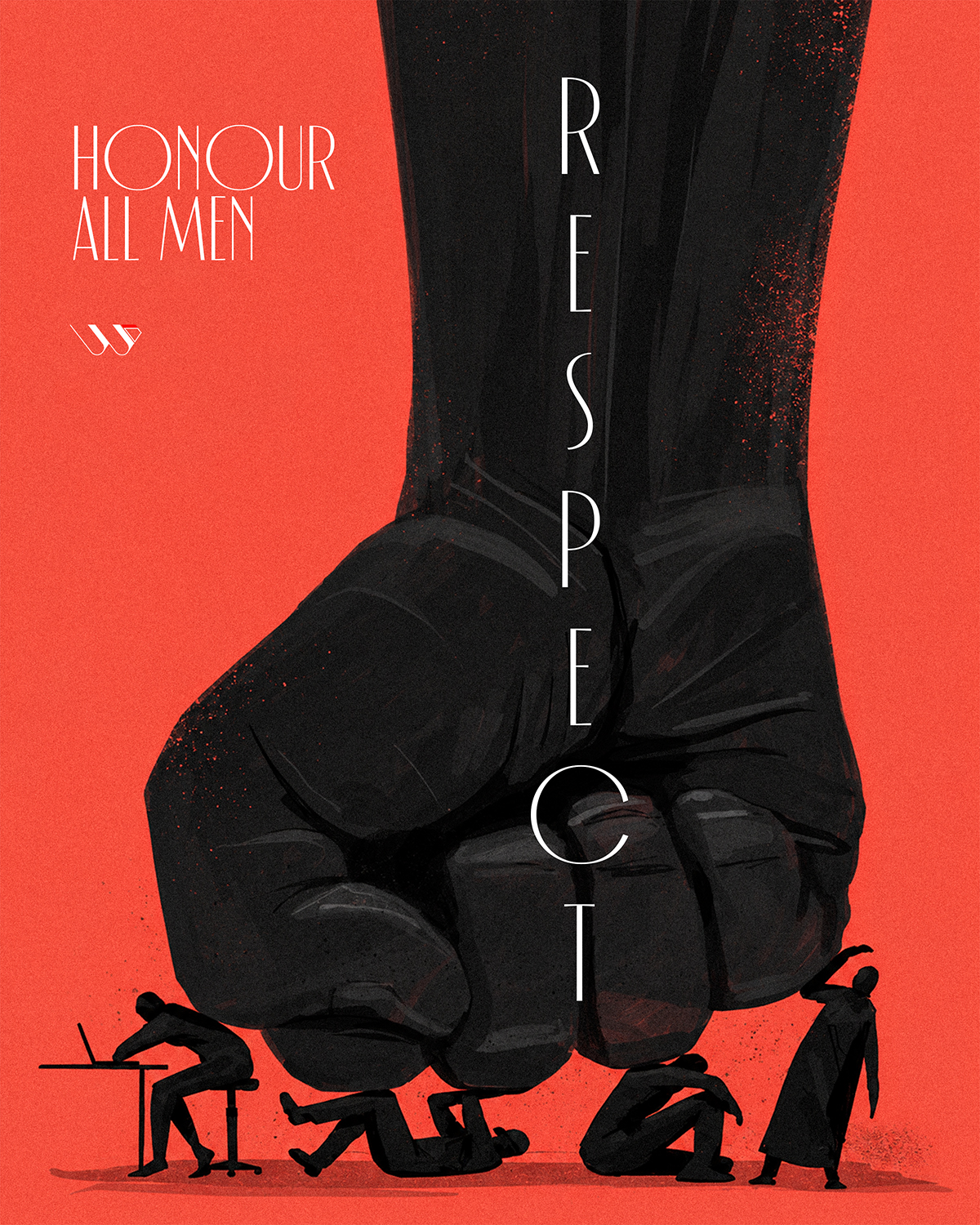
Respect: Honour All Men
In a world where respect has gradually become culturally unfashionable, people can mistake rudeness for confidence, celebrate disrespect as boldness, and praise speaking without restraint as “real” or “cool”. Perhaps part of the problem is that we have come to view respect largely as something people must earn. We readily respect those who are older, accomplished, influential, wealthy, educated, or hold positions of authority, while those who seem to have little social importance can easily receive a different standard of treatment.
Yet Christianity calls us to something deeper. Before considering a person's achievements, status or usefulness to us, Scripture teaches us to recognise the value God has placed upon human beings. How we treat people should therefore not simply reflect the culture around us, but the character of Christ being formed within us.
A common saying is that respect is reciprocal: respect me, and I will respect you. Certainly, healthy relationships flourish where honour is mutual. But biblical respect cannot be reduced to an exchange in which our conduct towards others is determined entirely by theirs towards us.
Peter writes, “Honour all men. Love the brotherhood. Fear God. Honour the king” (1 Peter 2:17). The instruction is striking because honour is not restricted to leaders, elders, or those we naturally admire. Honour all men. In that sense, a basic posture of Christian respect is not something another person must first earn. It is fundamentally unconditional: another person's behaviour may affect our trust, closeness, or access, but it does not give us permission to abandon the basic dignity with which we are called to treat one another.
Respect, therefore, is not merely admiration. It is recognising that another person's dignity, boundaries, time, voice, and humanity matter. You may not agree with them. You may not trust them. You may even need to correct or distance yourself from them. But none of these requires you to treat them as though they have no value.
How We See People
The way we treat people is often connected to the way we have first chosen to see them.
James warns believers against giving the wealthy special treatment while humiliating the poor. He describes a rich man entering the assembly and being offered a good seat, while a poor man is told, “Stand thou there, or sit here under my footstool” (James 2:2–4). The problem was not simply the seating arrangement; it revealed that people's perceived importance had begun to determine how they were treated.
Jesus repeatedly challenged this way of thinking. He made time for children when His disciples considered them an interruption (Mark 10:13–16). He spoke publicly with a Samaritan woman despite the social barriers surrounding that interaction (John 4:7–27). He allowed people society had marginalised to come near Him and treated them as people, not labels.
Christian respect asks us to do the same. The cleaner, security guard, driver, waiter, junior colleague, elderly relative, child and person who cannot advance our interests should not receive a lesser version of our character simply because they possess less social power.
The Way We Speak
Perhaps one of the clearest expressions of respect is in our speech.
James points out the contradiction of blessing God while cursing people who are “made after the similitude of God” (James 3:9), echoing Scripture’s foundational teaching that humanity was created in God’s image (Genesis 1:26–27). His argument is significant: how we speak to people should be shaped by the fact that they bear the image of God.
This does not mean that respect requires avoiding disagreement. Scripture allows correction, confrontation and rebuke where necessary. But disagreement does not give us permission to insult, ridicule or deliberately humiliate another person.
Paul writes, “Let your speech be alway with grace” (Colossians 4:6), while Proverbs says, “A soft answer turneth away wrath” (Proverbs 15:1). Respect affects not only what we say, but also our tone, timing, and word choice.
This matters especially in close relationships. Familiarity can easily produce carelessness. People sometimes speak to spouses, siblings, children or parents in ways they would never speak to a stranger, employer or respected leader. Yet closeness should not reduce respect. If anything, the people who live closest to us should experience the most authentic version of our Christian character.
Respect Does Not Require Agreement
Another important distinction is that respect is not the same thing as agreement. You can respect someone and disagree strongly with their opinion. You can recognise authority without pretending that authority is always exercised correctly. You can treat someone courteously while maintaining necessary boundaries. You can honour a parent or leader without agreeing with every decision they make.
Paul says, “If it be possible, as much as lieth in you, live peaceably with all men” (Romans 12:18). Peace does not require differences to disappear; it requires that differences do not automatically become hostile.
This is particularly relevant in disagreement. Sometimes, the moment we conclude that another person is wrong, we feel justified in treating them badly. Their error becomes permission to be disrespectful. But the Christian should be able to say, “I disagree with you,” without needing to communicate, “You are beneath me.”
Peter instructs believers to give an answer for their hope “with meekness and fear” (1 Peter 3:15). Even when defending truth, the manner still matters.
Respect and Authority
Scripture also teaches respect for legitimate authority. Children are instructed to honour their parents (Ephesians 6:2). Believers are told to recognise those who labour and lead among them (1 Thessalonians 5:12–13). Peter speaks of honouring governing authority (1 Peter 2:17).
But Christian respect is not only upward. Paul tells believers, “In honour preferring one another” (Romans 12:10), and Philippians says, “In lowliness of mind let each esteem other better than themselves” (Philippians 2:3). Respect should move in every direction.
A leader should respect those they lead. A parent should respect a child's dignity. An employer should respect an employee. A husband and wife should honour one another. Possessing authority does not remove the responsibility to treat people properly.
In fact, authority often reveals whether respect is genuinely part of our character. It is easy to be courteous towards someone whose approval or power we need. A revealing test of character is how we treat people who possess little power to reward us, impress us or hold us accountable for the way we treat them.
Familiarity Should Not Destroy Honour
Another subtle way respect can disappear is familiarity. The longer we know someone, the more aware we become of their weaknesses. We see what outsiders do not see, and over time it can become easy to reduce them to those weaknesses.
Mark records that when Jesus returned to His own country, people struggled to receive Him because they were too familiar with His ordinary background: “Is not this the carpenter…?” (Mark 6:3).
Something similar can happen in relationships. A spouse can become so familiar that appreciation disappears. Parents can be taken for granted. Friends who have been faithful for years may receive less courtesy than new acquaintances. People who have consistently served us can gradually become invisible.
Respect teaches us to remain grateful even after familiarity removes novelty.
The Golden Rule of Respect
Jesus gives us perhaps the simplest practical principle: “Whatsoever ye would that men should do to you, do ye even so to them” (Matthew 7:12).
Most of us want to be listened to. We want our time respected, our boundaries considered, our mistakes corrected without humiliation, and our opinions heard even when they are not accepted. We want to be treated with dignity regardless of our social position.
Christian etiquette asks us to extend the same consideration to others.
Respect is therefore more than polished manners. It is love that recognises another person's worth and lets that recognition shape our behaviour. It is refusing to dishonour people simply because we disagree with them, outrank them, know their weaknesses, or gain nothing from them.
Peter's instruction remains remarkably simple: “Honour all men.”
As Christ is formed in us, respect should become something people experience not simply because of who they are to us, but because of who we are in Christ.




Comments
Please log in to comment.