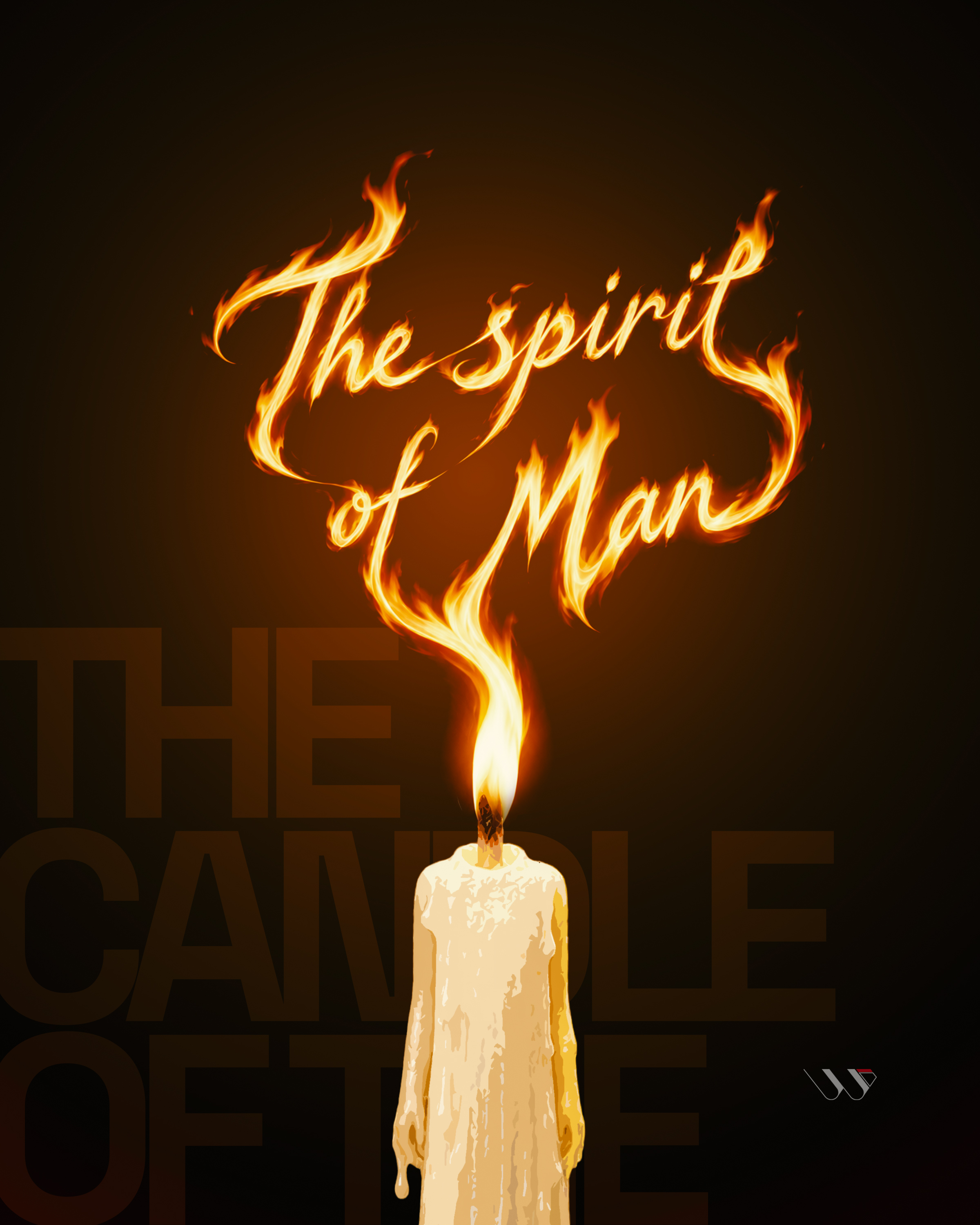
The Candle of the LORD
There is a dimension of the human person that cannot be adequately explained by intellect, emotion, personality or physical existence. We can examine the brain, study behaviour, describe emotions, analyse thoughts and observe actions, yet Scripture still points to something deeper within man—an inward dimension that cannot be seen with the eyes or reduced to the ecosystem of the mind. The Bible calls this dimension the human spirit.
Paul writes, “For what man knoweth the things of a man, save the spirit of man which is in him?” (1 Corinthians 2:11). He makes a clear distinction between the outward man people interact with and an inward spiritual dimension that belongs uniquely to the person.
The human spirit is therefore not the Holy Spirit, nor is it simply another name for the mind, emotions or conscience. It is the deepest spiritual dimension of man through which we relate with God and participate in spiritual life.
Jesus said: “God is a Spirit: and they that worship him must worship him in spirit and in truth” (John 4:24). The capacity to worship God is not merely intellectual. It is spiritual. This is why Christianity is not simply the adoption of a philosophy or a moral system. At its deepest level, it involves the restoration of a man’s relationship with God.
This distinction is important because many inward experiences are often grouped carelessly. A thought comes, and we call it our spirit. We feel strongly about something and immediately conclude that our spirit is speaking. Our conscience troubles us, and we assume that the Holy Spirit has spoken directly to our spirit.
But Scripture gives us more careful distinctions.
The Spirit, Soul and Inner Life
Paul prayed for the Thessalonians that their “whole spirit and soul and body be preserved blameless” (1 Thessalonians 5:23). Whatever theological definitions that may be given to these terms, Scripture clearly recognises dimensions of human existence beyond the physical body.
The mind thinks and reasons. The emotions respond to experiences. The will chooses. The conscience evaluates our actions morally. The human spirit, however, speaks to that deeper spiritual capacity by which man relates with God.
This is why Jesus said, “God is a Spirit: and they that worship him must worship him in spirit and in truth” (John 4:24). Spiritual fellowship with God is not merely an intellectual or emotional exercise.
You can study information about God without actually knowing Him relationally. You can experience strong emotions during worship without those emotions necessarily being the same thing as spiritual communion. The spirit goes deeper.
The Spirit Before the Fall
To understand the condition of the human spirit, we must return to Eden. Genesis 1:27 says, “So God created man in his own image, in the image of God created he him.” Human beings were created for relationship with God. Adam did not merely possess biological life; he existed in fellowship with his Creator. There was no spiritual separation between God and man as we know it after the Fall.
I was listening to a podcast yesterday where the guest tried to describe just how insignificant we are in size in relation to the universe. A human being is tiny compared with the Earth; the Earth itself is only one planet orbiting one star among billions in the Milky Way; and the Milky Way is only one galaxy among an incomprehensibly vast number (billions) within the observable universe. Beyond what we can observe, we still do not know the full extent of what exists. Whether the universe is finite or extends indefinitely in every direction remains beyond what we can presently establish with certainty. In relative terms, trace back, you’ll see we are smaller than a speck of dust in an expanse so vast.
Thinking about that can be humbling. There is so much about God and creation that the human mind cannot fully grasp, it will only take the spirit in man to draw from that dimension. Psalm 8 captures something of this wonder: “When I consider thy heavens, the work of thy fingers, the moon and the stars, which thou hast ordained; What is man, that thou art mindful of him?” (Psalm 8:3–4). Man may be physically small within creation, but Scripture presents him as spiritually significant because he was created to know and relate with the Creator.
The Fall changed this.
God had warned Adam, “In the day that thou eatest thereof thou shalt surely die” (Genesis 2:17). Yet when Adam sinned, physical death did not occur immediately. Something deeper happened: humanity became alienated from God. The fellowship for which man had been created was broken, and mankind entered a condition of spiritual separation from the life of God.
Paul later describes this condition as being “dead in trespasses and sins” (Ephesians 2:1). This does not mean that human beings ceased to possess a spirit. Rather, man became spiritually separated from the life and fellowship of God.
The problem of mankind was therefore deeper than behaviour. It was a problem of nature and relationship. Man did not merely need better instructions, improved morals or stronger discipline. He needed life.
What Happens to the Human Spirit at Salvation?
One of the great promises of the New Covenant was that God would do something inward in man. Through Ezekiel, He said, “A new heart also will I give you, and a new spirit will I put within you” (Ezekiel 36:26).
Jesus later explained the necessity of being “born of the Spirit” (John 3:6). Paul also writes, “If any man be in Christ, he is a new creature” (2 Corinthians 5:17). Salvation therefore involves more than behaviour modification. God does not merely take an old life and teach it better manners. Something happens within. The believer receives spiritual life through Christ and becomes capable of fellowship with God in a way that goes beyond external religion.
This is why Christianity cannot ultimately be reduced to rules, rituals and moral improvement. It is life from God entering man and producing transformation from within.
The Holy Spirit and the Human Spirit
Here is another important distinction that must be maintained. The Holy Spirit is God. The human spirit (in this context) refers to you. Romans 8:16 says, “The Spirit itself beareth witness with our spirit, that we are the children of God.” Notice the language carefully. There is the Spirit, and there is our spirit. They are not the same.
The Holy Spirit does not replace the human spirit. Rather, He dwells within the believer and relates to our regenerated spirit. Paul writes, “He that is joined unto the Lord is one spirit” (1 Corinthians 6:17). This speaks of profound spiritual union and fellowship, not the disappearance of human identity.
The believer therefore lives from an extraordinary reality: the Spirit of God dwells within. Paul asks, “Know ye not that ye are the temple of God, and that the Spirit of God dwelleth in you?” (1 Corinthians 3:16). That changes where we primarily look for fellowship with God. Under the New Covenant, God is not merely Someone we approach externally. He has made the believer His dwelling place.
The Inward Witness
One important function of the human spirit is seen in what Scripture describes as witness. Romans 8:16 says, “The Spirit itself beareth witness with our spirit…” This helps us understand why Christians sometimes speak of an inward spiritual recognition that precedes full intellectual explanation.
This, however, does not mean that every inward impression is automatically from God. The distinction is extremely important because thoughts, emotions, desires, and conscience all operate within the inner life—and some of them can speak very loudly. An impression may feel strong without necessarily being divine.
This is why inward leading must always remain submitted to Scripture and carefully tested. The strength of an impression is not what makes it trustworthy; its agreement with the truth and character of God is what gives it weight.
The Holy Spirit is called “the Spirit of truth” (John 16:13). Whatever we claim to perceive inwardly should therefore never be used to contradict what God has already revealed in His Word.
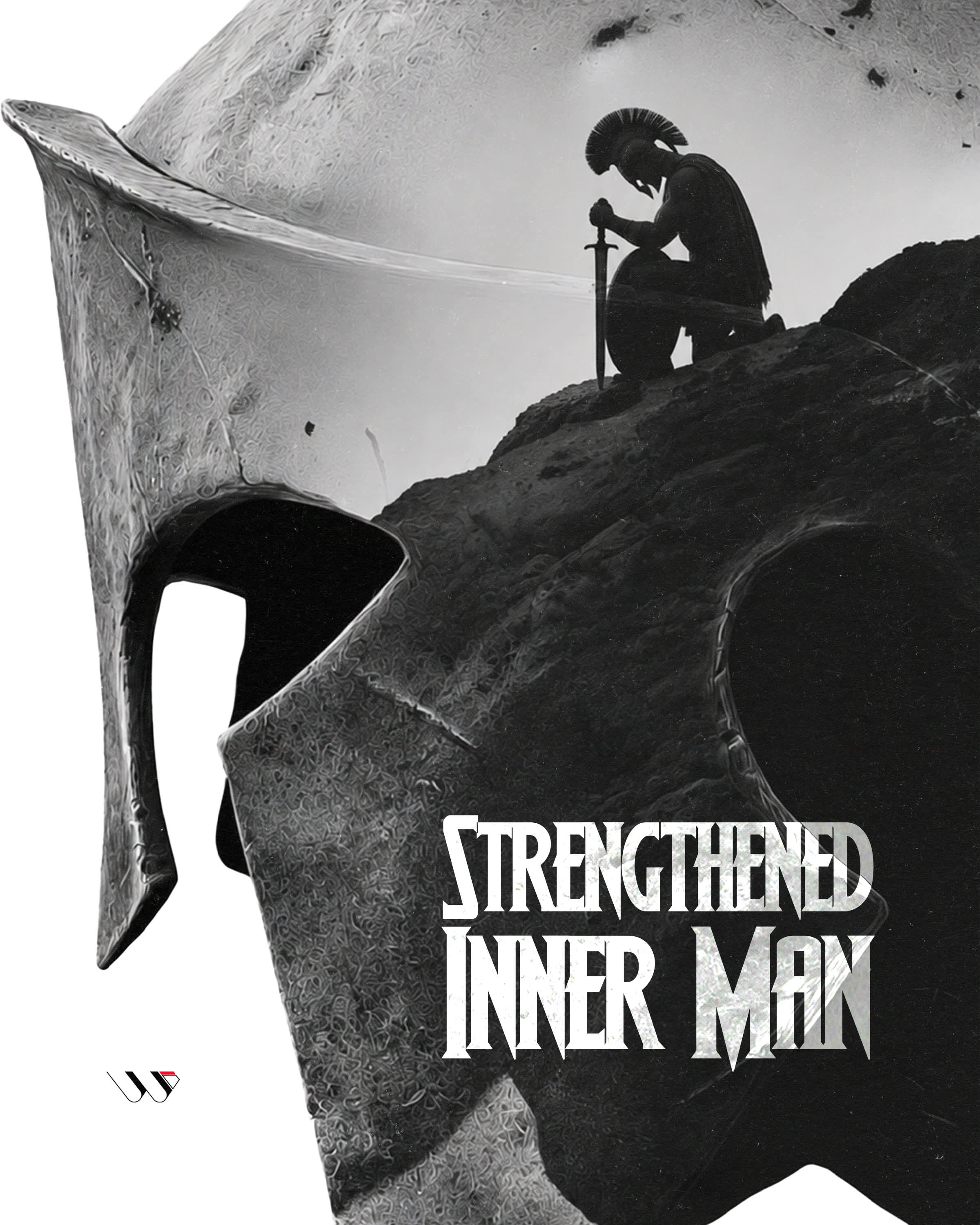
The human spirit therefore occupies an important place in the believer's inner life. There will be moments when the mind still has questions and the emotions remain unsettled, yet something deeper within recognises the direction of God. This is why the inner man must be strengthened through the Word, prayer, obedience, fellowship with God and responsiveness to the Holy Spirit. Paul prayed that we would be “strengthened with might by his Spirit in the inner man” (Ephesians 3:16), while Proverbs says, “The spirit of man is the candle of the LORD” (Proverbs 20:27).
Spiritual maturity, then, is not merely learning to control outward behaviour; it is allowing the mind to be renewed by truth, the conscience to be informed by truth, the emotions to come under truth, and the human spirit to become increasingly responsive to the Spirit of truth. The Christian life is not merely God working around us, but God, by His Spirit, working deeply within us.
Continued…





Comments
Please log in to comment.