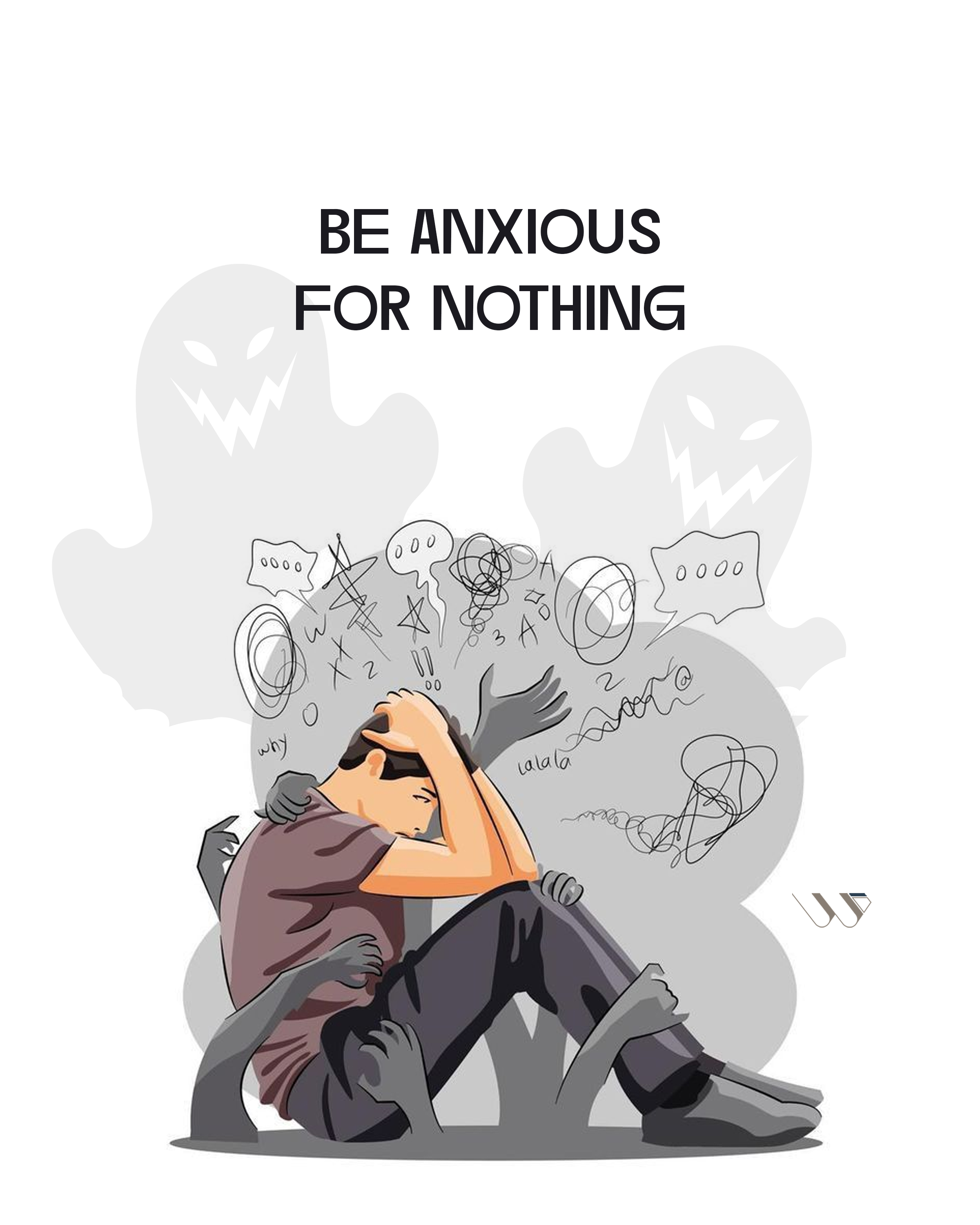
Be Anxious for Nothing
A woman named Sarah (name changed for privacy) was struggling with overwhelming anxiety about an upcoming, important job interview. The night before, her thoughts were racing—“What if I fail?” “What if I embarrass myself?”—and she could not sleep. Her mind was filled with fear and dread. This was not mere nervousness; it was anxiety keeping her awake.
Earlier that year, Sarah had read Battlefield of the Mind by Joyce Meyer, particularly the chapter on an anxious and worried mind. In the book, Joyce Meyer recounts how she worried about things that had not happened and might never happen. Her mind constantly replayed worst‑case scenarios. Over time, God taught her that anxiety is not a feeling problem, but a thinking problem.
Personally, in my early childhood, I was also a victim of anxiety. I remember that whenever my parents scolded or disciplined me (I don’t need to go into the details, it’s quite different here in Africa), I would find myself in the middle of the night rehearsing fears—creating dreadful experiences and imagined scenarios in my mind. I would weep bitterly until there were no tears left, and then fall asleep. If I remember correctly, the recurring dread I created was the fear of being thrown out of the house to the streets to fend for myself. Thinking back today, not even the slightest of such ever occurred. Indeed, anxiety operates as a destructive spirit, and I believe many people have experienced, or are still experiencing, this same patterns.
Like many destructive patterns, anxiety often begins with a single unchecked thought, then evolves into a habit, grows into a mindset, eventually shapes one’s lifestyle, and ultimately becomes reinforced by an evil spirit. Sarah, however, was able to come out of anxiety by taking the following steps:
1. She recognised anxiety for what it was—fearful thinking she did not have to accept. “For God hath not given us the spirit of fear; but of power, and of love, and of a sound mind” (2 Timothy 1:7).
2. She paused and prayed, deliberately handing her worries to God rather than brooding over them. “Be careful for nothing… but in every thing by prayer and supplication with thanksgiving let your requests be made known unto God” (Philippians 4:6–7). Worry is not replaced by optimism, but by intentional prayer.
3. She began to think and speak God’s Word—the truth, not the lies her mind produced. “Whatsoever things are true… if there be any virtue, and if there be any praise, think on these things” (Philippians 4:8). Instead of rehearsing fear, she rehearsed Scripture. Since the devil is the father of lies (John 8:44), it is truth from God’s Word that overcomes him. Yet, it is the Word rooted in the heart that can be confidently confessed (Romans 10:10).
4. She concluded by thanking God in advance for the success. “…but in every thing by prayer and supplication with thanksgiving let your requests be made known unto God” (Philippians 4:6). With praise comes His presence, and with His presence comes peace (Psalm 22:3; John 14:27).
Here are some truth‑statements concerning God’s promise of peace to you:
- God’s peace is a promise, not a mood. “Peace I leave with you, my peace I give unto you… Let not your heart be troubled, neither let it be afraid” (John 14:27).
- God’s peace is superior to the frailties of the mind. “And the peace of God, which passeth all understanding, shall keep your hearts and minds through Christ Jesus” (Philippians 4:7).
- Peace flows from trust, not control. “Thou wilt keep him in perfect peace, whose mind is stayed on thee: because he trusts in thee” (Isaiah 26:3).
- Peace is sustained by God’s Word. “Great peace have they which love thy law: and nothing shall offend them” (Psalm 119:165).
- Peace is God’s intention for your life, not a contradiction. “For I know the thoughts that I think toward you… thoughts of peace, and not of evil” (Jeremiah 29:11).
Anxiety may knock persistently at the door of the mind, but peace is the rightful occupant of the believer’s heart. When the mind is anchored in God’s Word and surrendered in prayer, peace is no longer something we seek; it becomes something we keep.




Comments
Please log in to comment.