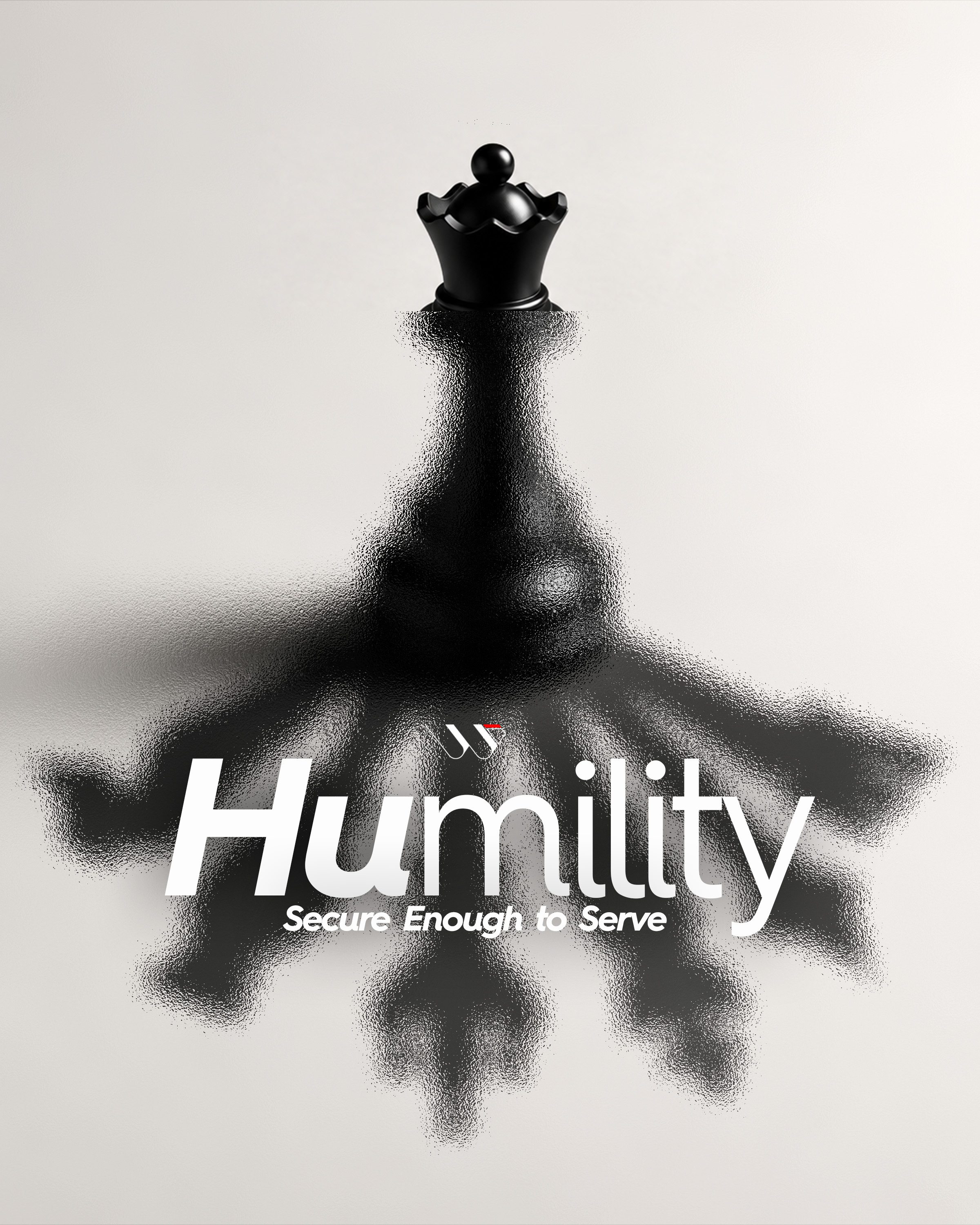
Humility: Secure Enough to Serve
Humility is one of those virtues almost everyone admires in others, but few naturally enjoy testing it in themselves. It is easy to describe ourselves as humble until we are overlooked, corrected, misunderstood, passed over for recognition, or asked to serve somewhere nobody will notice. Those moments often reveal whether humility is truly part of our character or simply part of the image we have of ourselves.
Biblical humility is not self-neglect, weakness, or pretending we have no ability. It is seeing ourselves truthfully before God. Paul writes, “Not to think of himself more highly than he ought to think; but to think soberly” (Romans 12:3). Humility does not require us to think falsely about ourselves; it requires us to think accurately. We can recognise our gifts without making them the basis of superiority, acknowledge our achievements without forgetting grace, and carry confidence without needing to make another person smaller.
Humility Begins Before God
True humility begins with recognising who God is and who we are before Him.
James writes, “God resisteth the proud, but giveth grace unto the humble” (James 4:6). Pride places the self at the centre—my ability, my opinion, my rights, my accomplishments and my importance. Humility remembers that whatever we possess ultimately exists within God's grace and providence.
Paul asks the Corinthians, “What hast thou that thou didst not receive?” (1 Corinthians 4:7). The question dismantles much of what feeds pride. We can cultivate intelligence, but we did not receive the capacity itself. We can maximise opportunities, but we did not create every circumstance that made them possible. Even spiritual endowments are gifts. Humility therefore does not deny achievement; it remembers its Source.
This is why success should make us grateful, not superior. The more God entrusts to us, the greater our responsibility becomes. Jesus said, “For unto whomsoever much is given, of him shall be much required” (Luke 12:48).
Jesus and the Humility of Greatness
Jesus gives us the highest picture of humility precisely because He had nothing to prove. Paul writes that Christ, “being in the form of God, thought it not robbery to be equal with God: but made himself of no reputation, and took upon him the form of a servant” (Philippians 2:6–7). His humility did not come from uncertainty about His identity. He knew who He was, yet that knowledge did not prevent Him from stooping to serve.
John 13 gives one of the clearest pictures of Jesus' humility. While His washing of the disciples' feet carries deeper Kingdom significance, Jesus made one lesson unmistakable: He was teaching His disciples the humility of service. Scripture first tells us that He knew “that the Father had given all things into his hands, and that he was come from God, and went to God” (John 13:3). With full awareness of His identity and authority, He rose from supper, took a towel and performed the work of a servant.
Afterwards, He said, “Ye call me Master and Lord: and ye say well; for so I am. If I then, your Lord and Master, have washed your feet; ye also ought to wash one another's feet. For I have given you an example, that ye should do as I have done to you” (John 13:13–15). Jesus did not deny His position; He affirmed it in humility, and showed that service does not threaten true greatness. Humility is not thinking less of who you are, but refusing to use who you are as a reason to place yourself above serving others.
He then added, “The servant is not greater than his lord; neither he that is sent greater than he that sent him… happy are ye if ye do them” (John 13:16–17). The lesson was simple: if the Lord could stoop to serve, none of His followers should consider themselves too important to do the same.
Christian greatness therefore does not ask, “How many people serve me?” but “What has God placed in my hands with which I can serve?”
Humility in Relationships
Paul writes, “In lowliness of mind let each esteem other better than themselves. Look not every man on his own things, but every man also on the things of others” (Philippians 2:3–4). Humility makes room for another person's interests, perspective and contribution.
This does not mean believing everyone else is more gifted or intelligent than we are. It means refusing to organise relationships around our own importance. A humble person can listen without needing to dominate every conversation. They can celebrate another person's success without feeling diminished. They can allow someone else to receive credit. They can say, “You were right,” without experiencing it as a loss of dignity.
Pride often turns ordinary interactions into competitions. Who knows/has more? Who earns more? Who is more influential? Who received recognition? Who had the better idea? Humility frees us from the exhausting need to establish our place continually.
Paul says, “Be kindly affectioned one to another with brotherly love; in honour preferring one another” (Romans 12:10). Humility lets us honour another person without seeing their elevation as our reduction.
Humility Can Be Corrected
One of the clearest tests of humility is how we respond to correction. Most people enjoy being teachable in areas where they already agree with the teacher. The real test comes when someone points out something in us we didn't want to see.
Proverbs says, “He that refuseth instruction despiseth his own soul: but he that heareth reproof getteth understanding” (Proverbs 15:32). Humility does not mean every criticism is correct; people can misunderstand us, speak unfairly or offer poor advice. But humility is willing to examine correction before dismissing it. Pride immediately defends itself. Humility first asks whether there is something to learn.
Moses demonstrated this when Jethro observed that he was trying to judge every matter among the Israelites by himself and warned, “The thing that thou doest is not good” (Exodus 18:17). Despite his position as Israel’s leader, Moses did not dismiss the counsel. Scripture says, “So Moses hearkened to the voice of his father in law, and did all that he had said” (Exodus 18:24). Humility is secure enough to recognise that wisdom can come through someone else and mature enough to change course when necessary.
Humility Knows How to Apologise
Humility also makes repentance possible. Some conflicts remain unresolved not because the issue is complicated but because nobody wants to say, “I was wrong.” We sometimes apologise indirectly: “I am sorry you felt that way,” “If I offended you, I’m sorry,” or “I am sorry, but you also…” The words sound like an apology while responsibility remains carefully protected. Humility can say plainly, “I was wrong. I should not have spoken that way. Please forgive me.”
James instructs believers, “Confess your faults one to another” (James 5:16). Relationships become safer when people know we can recognise others' failures and own our own. An apology does not make us smaller. Often, it demonstrates that our identity is secure enough to survive admitting imperfection.
Humility and Recognition
Pride has a complicated relationship with recognition. It wants good things noticed and can become discouraged when they aren't. Jesus warned against doing righteous acts primarily “to be seen of men” (Matthew 6:1). He spoke about giving, praying and fasting in ways that did not depend upon public recognition.
Humility does not mean refusing appreciation when it comes. Nothing is spiritual about pretending a compliment means nothing. We can receive encouragement gratefully. The problem begins when obedience depends on applause.
Jesus taught, “Whosoever shall exalt himself shall be abased; and he that shall humble himself shall be exalted” (Matthew 23:12). A humble person can serve without a microphone, contribute without their name being mentioned, and remain faithful when someone else receives the attention. They know that being unseen by people does not mean being unseen by God.
Humility Is Not Thinking Less of Your Worth
Humility is not low self-esteem or constant self-deprecation. Saying, “I am useless,” when God has gifted you, isn't necessarily humility. Refusing opportunities simply because you fear appearing confident is not humility either.
Jesus was humble, yet He knew exactly who He was. He could say, “I am the way, the truth, and the life” (John 14:6) without pride because the statement was true. Humility is not denying truth about ourselves. It is refusing to use truth about ourselves to establish superiority over others.
We can say, “God has given me this ability,” and remain humble because the emphasis remains on stewardship rather than self-exaltation. Peter writes, “As every man hath received the gift, even so minister the same one to another” (1 Peter 4:10). Gifts are not trophies proving our importance; they are resources entrusted to us for service.
Clothe Yourselves With Humility
Peter gives a beautiful instruction: “Be clothed with humility: for God resisteth the proud, and giveth grace to the humble” (1 Peter 5:5).
Clothing is visible. In the same way, humility should eventually become noticeable in how we relate to people. It shows up in our willingness to listen, serve, apologise, accept correction, honour others, and remain faithful without constant recognition.
Humility does not require us to disappear. It simply removes the need to make ourselves the centre continually. Perhaps that is why it sits beneath so many of the virtues we have considered in this series. Forgiveness requires humility to let go of an offence. Peacemaking requires humility to make the first move. Gentleness requires humility to restrain strength. Consideration requires humility to think about another person's interests. Even respect requires enough humility to recognise dignity outside ourselves.
Ultimately, humility is the freedom to know who we are without needing everyone else to know it too. Jesus was fully secure in His identity, yet He still stooped to serve. As His character is formed in us, may we become secure enough to do the same—free from the need to prove ourselves, announce ourselves, or insist on being recognised.






Comments
Please log in to comment.